


The ASUS RT-AX5400 is the best router for advanced users who want speed, control, security, and room to grow.
A busy home can push a basic router past its limits. You may run a home server, game online, stream in 4K, connect smart devices, or use a VPN for work. That is why advanced users need more than a high speed number. They need stable Wi-Fi, useful controls, strong security, good coverage, and simple ways to expand the network. I compared the listed products for performance, features, setup, value, and real-world use. These picks suit different needs, from a portable 4G hotspot to a modern Wi-Fi 7 mesh system.
See the differences between my top picks at a glance.
| Product | Best For | Wireless Class | Main Strength | Coverage / Users | Buy |
|---|---|---|---|---|---|
| TIANJIE 4G WiFi Router | Travel and backup internet | 4G, up to 150 Mbps | USB plug-and-play hotspot | Up to 10 users | View on Amazon |
| NETGEAR Nighthawk MK72 | Medium homes | Wi-Fi 6 AX3000 | Simple whole-home mesh | Up to 3,000 sq. ft.; 35+ devices | View on Amazon |
| ASUS RT-AX5400 | Advanced home networks | Wi-Fi 6 AX5400 | VPN, security, and control | Router-based coverage | View on Amazon |
| TP-Link Deco BE23 | Wi-Fi 7 upgrades | Wi-Fi 7 BE3600 | Multi-gig wired backhaul | Up to 2,500 sq. ft. | View on Amazon |
| NETGEAR Nighthawk MK63S | Large homes | Wi-Fi 6 AX1800 | Wide mesh coverage | Up to 4,500 sq. ft.; 25+ devices | View on Amazon |
| Taunton’s Router Guide | Learning router work | Not applicable | Hands-on reference | Not applicable | View on Amazon |
TIANJIE 4G WiFi Router
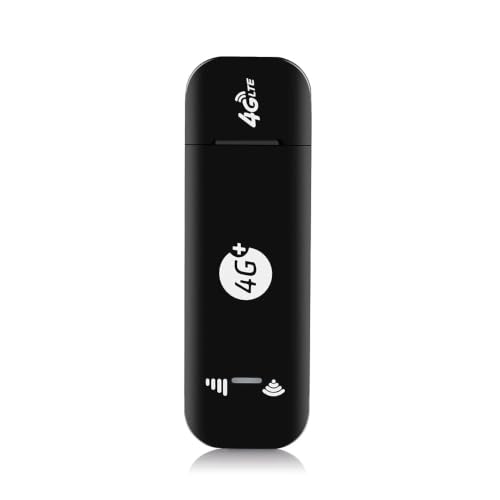
The TIANJIE 4G WiFi Router fills a very different role from a home Wi-Fi 6 router. It uses a compatible 4G connection to create a portable wireless hotspot. The listed speed reaches up to 150 Mbps, and the device supports up to 10 users. Its USB design makes it easy to carry and connect when you need internet away from a fixed broadband line.
I see the most value here for travel, temporary work sites, RV use, and emergency backup. It can also help advanced users test a cellular connection before choosing a full 4G or 5G gateway. Still, buyers must check carrier support, SIM requirements, and local network bands before ordering. Cellular speed depends on signal strength, tower load, and the service plan.
Pros:
- Portable design for travel and temporary use
- Up to 150 Mbps listed 4G speed
- Supports up to 10 connected users
- USB plug-and-play design is simple to move
- Useful as a backup connection for basic work
- Does not require a fixed broadband line
Cons:
- Actual speed depends on the carrier and signal
- Carrier bands and SIM support need careful checking
- It lacks the advanced LAN controls of a full home router
What Amazon Buyers Are Saying
Public customer feedback for compact 4G routers commonly focuses on ease of setup, portability, and the quality of the cellular signal. Buyers who use a supported SIM often value the quick connection and small form. The main concerns tend to involve carrier compatibility, unclear network settings, and speed that changes by location. I would treat those points as key checks before purchase rather than assume the device works with every carrier.
My Recommendation
I recommend the TIANJIE for users who need mobile internet, not as the main router for a demanding smart home. It can be a practical low-cost backup when a fixed connection fails. Confirm compatibility first. It earns a strong score for portability but a lower score for advanced home networking.
NETGEAR Nighthawk MK72 Mesh System
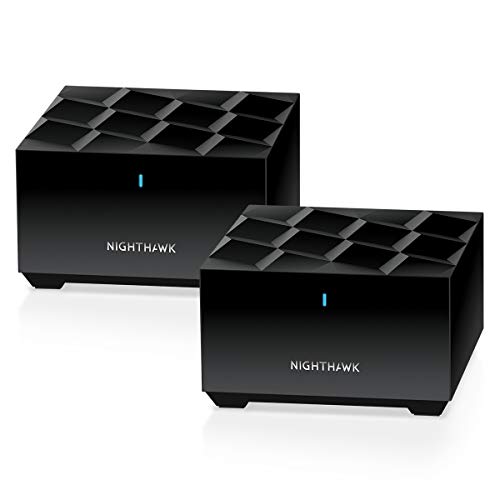
The NETGEAR Nighthawk MK72 combines a main router with one satellite extender. It uses dual-band Wi-Fi 6 and carries an AX3000 class rating. NETGEAR lists coverage up to 3,000 square feet and support for more than 35 devices. That makes it a sensible step up for homes that suffer from weak rooms but do not need a large three-unit system.
Its mesh design aims to keep one network name across the home. That helps phones, laptops, and smart devices move between the router and satellite with less manual work. Advanced users will appreciate the cleaner layout compared with several unrelated access points. However, this system may feel limited if you need deep routing controls, multiple multi-gig ports, or a large wired lab.
Pros:
- Wi-Fi 6 improves handling of busy home networks
- One router and one satellite provide useful room-to-room coverage
- Listed coverage reaches up to 3,000 square feet
- Supports more than 35 connected devices
- Mesh roaming reduces the need to switch networks
- Nighthawk tools make setup and monitoring approachable
Cons:
- Dual-band design has less wireless capacity than tri-band systems
- One satellite may not cover homes with thick walls or several floors
- Power users may want more detailed network controls
What Amazon Buyers Are Saying
Customer feedback around this model often highlights simple installation, better coverage, and a noticeable improvement over older single routers. Buyers also tend to like the single network name and the compact satellite. Common concerns include app setup, occasional connection drops, and coverage that varies with wall placement. Those experiences show why mesh placement matters as much as the product label.
My Recommendation
The MK72 is a good middle-ground mesh kit for an apartment, townhouse, or medium home. It is not my first choice for a network engineer who needs maximum control. For a family that wants Wi-Fi 6 coverage with less effort, it offers a balanced mix of speed and ease.
ASUS RT-AX5400 WiFi 6 Router

The ASUS RT-AX5400 is the strongest all-around choice in this review for advanced home users. It uses Wi-Fi 6 with an AX5400 class rating and offers more network tools than a basic consumer router. The feature set includes built-in VPN support, Instant Guard, advanced parental controls, and lifetime internet security features listed by ASUS. It also works with AiMesh for future expansion.
I like this router because it gives an experienced user more control without forcing a move to expensive business hardware. You can build a stronger home setup for gaming, streaming, remote work, and smart home traffic. AiMesh also lets you add compatible ASUS units later. As with any router, the advertised wireless rate is a combined link class, not a guaranteed internet speed for one device.
Pros:
- Strong AX5400 Wi-Fi 6 class performance
- Wide feature set for advanced home networking
- Built-in VPN tools support more private connections
- Instant Guard helps create a secure remote link
- AiMesh allows compatible ASUS expansion
- Useful parental controls and security tools
- Good fit for gaming, streaming, and smart home traffic
Cons:
- One router may not cover a large home evenly
- Advanced settings can feel complex to first-time users
- Wi-Fi 7 devices will not use the newest Wi-Fi features
What Amazon Buyers Are Saying
Amazon buyers commonly value the strong signal, stable performance, clear ASUS app, and wide choice of settings. Advanced users often mention VPN options, AiMesh, and security controls as reasons to choose this model. Some complaints concern firmware updates, setup details, or the learning curve created by its many menus. In practice, the router rewards users who take time to review settings instead of relying only on the default setup.
My Recommendation
I recommend the RT-AX5400 as the best router for advanced users in this group. It offers the best blend of speed, control, security, and upgrade options. It is worth buying for users who want to tune a home network but do not want a complex rack-mounted system.
TP-Link Deco BE23 WiFi 7 Mesh

The TP-Link Deco BE23 brings Wi-Fi 7 to this comparison. It uses a dual-band BE3600 class design, supports four streams, and lists a combined speed of up to 3.6 Gbps. The product also includes two 2.5G ports, which can matter for a fast wired connection, network storage, or a wired backhaul. TP-Link lists coverage up to 2,500 square feet for this one-pack unit.
Its advanced appeal comes from newer wireless features such as Multi-Link Operation, often called MLO. MLO can let compatible devices use more than one band or link path, though the benefit depends on client support. HomeShield and VPN features add useful control. I would choose this model for a new network with Wi-Fi 7 devices or a fast local wired network, not just because of the label.
Pros:
- Wi-Fi 7 support helps prepare for newer client devices
- Two 2.5G ports suit multi-gig internet or local storage
- Listed four-stream, BE3600 class wireless design
- MLO can improve link use with compatible devices
- Deco mesh platform supports broader home coverage
- VPN and HomeShield tools add useful network control
Cons:
- Older Wi-Fi devices cannot use every Wi-Fi 7 benefit
- A one-pack system may not cover a large or tall home
- Some advanced options may depend on the Deco app or service plan
What Amazon Buyers Are Saying
Buyers of Wi-Fi 7 mesh products often praise fast setup, clean design, stronger coverage, and the value of 2.5G ports. Users with newer phones and laptops may notice better link rates on a suitable network. Common concerns include limited gains with older clients, app-based management, and coverage that depends on placement. That feedback fits the normal Wi-Fi 7 upgrade path: the largest gains appear when both the router and client support the newer standard.
My Recommendation
The Deco BE23 is the best future-facing pick here. It suits advanced users who want Wi-Fi 7 and multi-gig wired links. I would not buy it only to fix a slow internet plan, but it makes sense for a new home network, local file work, or a gradual Wi-Fi 7 upgrade.
NETGEAR Nighthawk MK63S Mesh System

The NETGEAR Nighthawk MK63S uses one router and two satellite extenders to build a larger Wi-Fi 6 mesh network. Its AX1800 class is lower than the ASUS RT-AX5400 and TP-Link BE23, but the three-unit layout can cover more floor space. NETGEAR lists coverage up to 4,500 square feet and support for more than 25 devices.
This system makes the most sense in a long home, a multi-level house, or a space with several dead zones. More nodes can improve reach, but they also add more placement decisions and wireless traffic. The included Armor security offer may add value, but buyers should check current terms because subscription features can change. It is a coverage-first system rather than a maximum-speed pick.
Pros:
- Three-unit design helps reach large homes
- Listed coverage up to 4,500 square feet
- Wi-Fi 6 improves support for modern devices
- Supports more than 25 connected devices
- Single mesh network simplifies movement around the home
- Armor security adds an extra layer of network protection
Cons:
- AX1800 capacity is modest for heavy power users
- Three nodes require careful placement for best results
- Some security features may involve subscription terms
What Amazon Buyers Are Saying
Amazon customers often like this kit for its broad coverage and simpler setup than a collection of separate extenders. Buyers with large homes report better signal reach when they place the satellites between the router and weak rooms. Some complaints involve speed loss at distant nodes, app issues, and the limits of the lower wireless class. Those points are important: coverage does not always equal high throughput at the edge of the network.
My Recommendation
I recommend the MK63S for users who value coverage above peak speed. It is a practical choice for a larger home with moderate traffic. Advanced users with many high-speed clients should consider the ASUS or TP-Link options first, but this NETGEAR kit remains useful when dead zones are the main problem.
Taunton’s Complete Router Guide

Taunton’s Complete Illustrated Guide to Routers is not a wireless network router. It is a printed reference for people who want to learn router woodworking. The book uses illustrations and project guidance to explain router tools, bits, cuts, and safe workshop practice. It therefore serves a different kind of advanced user from the networking products in this review.
I included it because the supplied product list includes it, but buyers should not confuse it with a Wi-Fi router guide. It may help a woodworker choose tools and understand basic router work. It will not explain Wi-Fi 6, Wi-Fi 7, VPNs, mesh placement, or network security. Check the subject and edition before buying if you need current technical information.
Pros:
- Useful illustrated reference for woodworking router tasks
- Helps beginners understand router tools and accessories
- Can support hands-on project planning
- Provides a non-digital learning option
- Relevant to woodworkers building practical skills
Cons:
- It is not a networking router
- It does not teach Wi-Fi or internet setup
- Printed guidance may not reflect newer tools or methods
What Amazon Buyers Are Saying
Feedback for illustrated woodworking books usually centers on the clarity of the drawings, project usefulness, and the value of having a reference on the workbench. Some readers may prefer newer digital resources or more specialized books. Because this title belongs to woodworking, its reviews should be judged by craft value, not by wireless networking needs.
My Recommendation
I recommend this book only for woodworking learners. It is not a buying option for someone searching for the best router for advanced users in a Wi-Fi context. For network buyers, choose one of the four actual networking devices above. For workshop users, this guide can be a helpful reference.
How to Choose the Best Router for Advanced Users
Choosing the best router for advanced users starts with your network plan, not the largest number on the box. Think about your internet speed, wired devices, home size, client devices, and the controls you will use. A fast router cannot fix weak service from an internet provider, poor node placement, or a bad cable. The right model should match both your current work and your next upgrade.
1. Match Wi-Fi Class to Your Devices
Wi-Fi 6 remains a strong choice for most homes. It handles many devices well and works with a wide range of phones, laptops, cameras, and smart home products. Wi-Fi 7 makes more sense when you already own compatible clients or plan to buy them soon. Features such as MLO need support from the client device, so an older laptop will not gain every Wi-Fi 7 benefit.
Also review the total wireless class with care. AX5400 or BE3600 describes a combined class across bands. It does not mean one phone will download at that speed. Real results depend on distance, walls, interference, client design, channel width, and the speed of your internet plan.
2. Check Ports, VPN Tools, and Network Control
Advanced users often need more than wireless speed. Look for enough Ethernet ports for desktops, game consoles, access points, and network storage. The TP-Link Deco BE23 stands out here with two 2.5G ports. A wired backhaul can also improve mesh performance because the nodes send data through Ethernet instead of sharing wireless airtime.
VPN support matters if you work from home, connect back to your network, or want more control over traffic. Review the VPN types and limits before you buy. Security tools, guest networks, parental controls, device profiles, and firmware updates also matter. I prefer a router that gives clear settings and regular maintenance rather than one that only promises a fast peak rate.
3. Select Coverage, Placement, and Long-Term Value
Choose a single router when your home has an open layout and one strong location. Choose mesh when walls, floors, or distance create dead zones. More nodes do not always mean more speed. Place each satellite where it still receives a strong signal from the main router, or use Ethernet backhaul when possible.
Finally, compare the full cost. Some security or support features may change after a trial period. Check the warranty, update history, app quality, and return policy. The best router for advanced users should give you useful control today and a clear upgrade path tomorrow. Do not pay for features you cannot use, but do not choose a basic model if you already know you need VPN, VLAN-style separation, multi-gig ports, or mesh expansion.
Final Verdict: Which Should You Buy?
For most advanced home users, I recommend the ASUS RT-AX5400. It combines strong Wi-Fi 6 performance, VPN tools, security, parental controls, and AiMesh expansion. Choose the TP-Link Deco BE23 for Wi-Fi 7 and 2.5G ports, or the NETGEAR MK63S for larger coverage.
The best router for advanced users should match your devices, space, and network goals. Review compatibility, ports, updates, and total cost before you buy.
FAQs Of Best Router for Advanced Users
What is the best router for advanced users?
The ASUS RT-AX5400 is the best overall choice here. It offers strong Wi-Fi 6 performance, VPN tools, security features, parental controls, and AiMesh expansion.
Is Wi-Fi 7 worth it for an advanced home network?
Wi-Fi 7 is worth considering if you own compatible devices, use a fast local network, or want a longer upgrade cycle. Older devices will not use every Wi-Fi 7 feature.
Should advanced users choose a router or mesh system?
Choose a single router for an open home with good central placement. Choose mesh when walls, floors, or distance create dead zones. Wired backhaul can improve mesh performance.
Do AX5400 and BE3600 show real internet speed?
No. These are wireless class ratings. Actual speed depends on the client, signal, walls, interference, cable, and internet plan.
What should I check before buying a 4G Wi-Fi router?
Check carrier support, SIM requirements, cellular bands, data limits, and signal quality in your area. Cellular speed can change with location and tower traffic.









[…] the world of routers can be overwhelming, especially with so many options available. Each router offers unique features catering to different needs. For those seeking high-speed internet, the […]
[…] gaming, or working, maintaining stable internet across several devices is crucial. Several top-tier routers cater to these needs by offering features like dual-band WiFi, mesh systems, and support for a vast […]