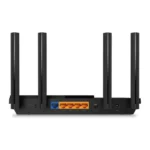
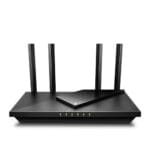
For ten connected devices, the TP-Link Archer BE600 offers the best mix of speed, range, ports, security, and value.
A home with ten devices can feel crowded fast. Phones, laptops, TVs, game consoles, cameras, and smart speakers all compete for the same wireless signal. An old router may cause slow streaming, lag during games, or dropped video calls. I tested the key features that matter most for a busy home network, including Wi-Fi standard, coverage, device capacity, wired ports, setup, and long-term value. These six routers suit different needs, from basic Wi-Fi 6 service to fast Wi-Fi 7 networks with multi-gig ports.
See the differences between my top picks at a glance.
| Router | Wi-Fi | Coverage | Device Rating | Best For | Buy |
|---|---|---|---|---|---|
| TP-Link Archer BE600 | Wi-Fi 7, tri-band | Up to 2,600 sq. ft. | Up to 120 devices | Best overall | View on Amazon |
| NETGEAR RS700S | Wi-Fi 7, tri-band | Up to 3,500 sq. ft. | Up to 200 devices | Large homes | View on Amazon |
| NETGEAR RS600 | Wi-Fi 7, tri-band | Up to 3,300 sq. ft. | Up to 150 devices | Fast whole-home Wi-Fi | View on Amazon |
| NETGEAR R6700AX | Wi-Fi 6, dual-band | Up to 1,500 sq. ft. | Up to 20 devices | Small budgets | View on Amazon |
| TP-Link Archer BE670 | Wi-Fi 7, tri-band | Not stated in supplied details | Not stated | 6GHz and 10G users | View on Amazon |
| ASUS RT-BE88U | Wi-Fi 7 | Not stated in supplied details | Not stated | Wired networking | View on Amazon |
TP-Link Archer BE600 Wi-Fi 7 Router

The TP-Link Archer BE600 is my top pick for most homes with ten devices. It uses tri-band Wi-Fi 7 and supports a 320MHz channel, which can help compatible devices move data at high speed. The router also offers a 10G port and three 2.5G LAN ports. That mix gives you room for fast internet, a desktop computer, a NAS drive, or a wired gaming system.
TP-Link lists coverage up to 2,600 square feet and support for up to 120 devices. Those figures give this router a large margin for a ten-device home. HomeShield adds network tools such as security controls and parental features, while VPN support helps users who need private remote access. I like this model because it avoids the common mistake of buying a basic router that becomes outdated after a small increase in connected devices.
Pros:
- Strong overall choice for a ten-device home
- Tri-band Wi-Fi 7 supports newer client devices
- 10G port helps prepare the network for faster internet
- Three 2.5G LAN ports suit wired high-speed devices
- Large stated coverage of up to 2,600 square feet
- High stated capacity of up to 120 devices
- HomeShield security and VPN features add useful control
Cons:
- Wi-Fi 7 benefits depend on having compatible devices
- It may cost more than a simple Wi-Fi 6 router
- Large homes with thick walls may still need a mesh node
What Amazon Buyers Are Saying
Buyer feedback for this type of TP-Link Wi-Fi 7 router commonly focuses on fast speeds, simple setup, and stable coverage. Users with newer phones and laptops tend to notice the most value because those devices can use newer Wi-Fi features. Common concerns include the higher price of Wi-Fi 7 hardware and the fact that older devices cannot use every feature.
My Recommendation
I recommend the Archer BE600 for buyers who want one well-rounded router rather than the largest possible unit. It has more capacity than a ten-device home needs today, but that extra room can improve long-term value. It is worth buying when you want fast wireless service, several multi-gig wired ports, and useful control tools without moving to an expensive premium model.
NETGEAR Nighthawk RS700S Wi-Fi 7 Router

The NETGEAR Nighthawk RS700S is built for homes that need wide coverage and high capacity. It has a stated range of up to 3,500 square feet and supports up to 200 devices. Its BE19000 tri-band Wi-Fi 7 design gives it plenty of headroom for streaming, work calls, smart home products, and game consoles at the same time.
One 10G port supports a high-speed internet connection or a fast wired device. Three Gigabit ports handle standard wired equipment. NETGEAR also highlights easy setup, which matters when you want to replace an older router without spending hours on network settings. This model is more router than most ten-device homes need, but its extra range can make sense in a large house.
Pros:
- Very large stated coverage area
- Supports up to 200 connected devices
- Tri-band Wi-Fi 7 offers strong future value
- 10G port supports high-speed wired networking
- Designed for busy homes with many active clients
- Simple setup can help first-time router buyers
Cons:
- May be excessive for a small apartment
- Only three additional Gigabit ports are listed
- Premium Wi-Fi 7 pricing may not suit a tight budget
What Amazon Buyers Are Saying
Common buyer comments about the RS700S center on broad coverage, strong speed, and an easy installation process. Large-home users often value the ability to place the router in a central area and reach more rooms without an extra unit. The usual concerns relate to cost, router size, and the limited benefit for households that use older Wi-Fi devices.
My Recommendation
I recommend the RS700S for a large home or a user who wants a powerful router for many years. It is not my value pick for ten devices, but it is an excellent choice when coverage matters more than price. Buy it if you have a fast internet plan, a large floor plan, or plans to add many smart home devices.
NETGEAR Nighthawk RS600 Wi-Fi 7 Router

The NETGEAR Nighthawk RS600 is a strong middle ground between a standard home router and a high-end Wi-Fi 7 system. It provides up to 3,300 square feet of stated coverage and supports up to 150 devices. That capacity is far above the needs of ten devices, so the router should have enough room for busy traffic and future additions.
Its BE18000 tri-band platform targets fast wireless performance across compatible clients. The 10G port gives you one fast connection for internet service, a server, or a workstation. Three Gigabit ports support common wired devices, though users with several multi-gig products may want more advanced Ethernet options. I see the RS600 as a practical pick for larger homes that do not need the RS700S ceiling.
Pros:
- Large stated coverage of up to 3,300 square feet
- Supports up to 150 devices
- Tri-band Wi-Fi 7 provides strong upgrade potential
- 10G port supports fast broadband plans
- Good fit for large families and smart homes
- Easy setup helps reduce installation time
Cons:
- More expensive than a basic Wi-Fi 6 router
- Only one 10G port is listed
- Three Gigabit LAN ports may limit multi-gig users
What Amazon Buyers Are Saying
Buyer discussions commonly praise the RS600 for its speed, range, and ability to handle many connected devices. People who upgrade from older Wi-Fi gear often value better reach and a cleaner connection during busy periods. Reported concerns usually involve price and the need for compatible Wi-Fi 7 devices to see the full benefit.
My Recommendation
The RS600 is worth buying if you want a powerful Wi-Fi 7 router with broad coverage but do not need the highest model in the range. It is a strong choice for a large home with ten active devices and plans for more. I would choose the Archer BE600 for value, but I would choose the RS600 for extra coverage.
NETGEAR Nighthawk R6700AX Wi-Fi 6 Router

The NETGEAR Nighthawk R6700AX is the most sensible budget choice in this group. It uses dual-band Wi-Fi 6 and offers up to 1,500 square feet of stated coverage. Its listed capacity reaches 20 devices, which gives a ten-device household some room for growth without paying for premium Wi-Fi 7 hardware.
Four Gigabit ports make it easy to connect a desktop, TV, game console, or other wired device. The listed wireless speed reaches 1.8 Gbps, although real speed depends on the internet plan, device type, distance, walls, and network traffic. This router will not match the range or capacity of the newer Nighthawk models, but it can deliver steady home Wi-Fi at a lower cost.
Pros:
- Affordable option for a ten-device home
- Wi-Fi 6 handles common streaming and work tasks well
- Four Gigabit LAN ports support several wired devices
- Up to 1,500 square feet suits apartments and small homes
- Up to 20 devices covers the stated target with some headroom
- Simple design and setup fit everyday home use
Cons:
- Lower device capacity than the Wi-Fi 7 models
- Dual-band design offers less room for busy networks
- Not the best choice for very large homes
What Amazon Buyers Are Saying
Buyers commonly like this style of NETGEAR router for its price, familiar setup process, and solid basic coverage. It often appeals to people replacing an older router in an apartment or small home. The main limits buyers discuss tend to involve range at the edge of the home and slower performance when many devices use the network at once.
My Recommendation
I recommend the R6700AX when your home has ten devices, a moderate internet plan, and a limited budget. It is not the most future-ready router here, but it covers the basic job well. Choose a Wi-Fi 7 model instead if you want multi-gig internet, wider coverage, or a large amount of capacity for future smart devices.
TP-Link Archer BE670 Wi-Fi 7 Router

The TP-Link Archer BE670 targets buyers who want a newer Wi-Fi 7 network with access to the 6GHz band. Its tri-band design and listed 12 Gbps class provide a strong platform for compatible phones, laptops, and wireless workstations. The router also includes 10G connectivity, which makes it a better fit for fast broadband and local file transfers than a basic Gigabit router.
Support for Amazon Alexa and Google Assistant can make basic network control more convenient in a smart home. The 6GHz band can offer a cleaner path for compatible devices because it has more modern wireless capacity, though its reach can be shorter through walls. Since the supplied product details do not state coverage or device capacity, I would check the current listing before buying it for a large house.
Pros:
- Tri-band Wi-Fi 7 supports the newer 6GHz band
- Listed 12 Gbps class suits demanding home networks
- 10G connectivity supports high-speed internet service
- Voice assistant support adds smart home convenience
- Good choice for new Wi-Fi 7 phones and laptops
- Strong upgrade path from older dual-band routers
Cons:
- Coverage and device capacity are not stated in the supplied details
- 6GHz signals may lose strength through walls
- Older devices cannot use every Wi-Fi 7 feature
What Amazon Buyers Are Saying
Buyer feedback on this class of TP-Link router often highlights fast wireless service, the value of the 6GHz band, and a clean setup process. Users with newer client devices usually gain more from the upgrade than users with older phones and laptops. Common concerns include the price of early Wi-Fi 7 hardware and the need to place the router well for strong 6GHz coverage.
My Recommendation
I recommend the Archer BE670 for buyers who care about the 6GHz band and 10G networking. It is a strong technical choice for a modern home, but I would confirm its coverage before using it in a large house. For ten devices in a typical home, it offers more speed potential than you need now and useful room for future upgrades.
ASUS RT-BE88U Wi-Fi 7 Router

The ASUS RT-BE88U stands out for its wired network design. It offers two 10G ports, including one 10G SFP+ port, four 2.5G ports, and four 1G ports. That is a rare level of wired flexibility for a home router. It can serve a user with a fast internet connection, a NAS, a gaming PC, and several wired workstations at the same time.
The router lists speeds up to 7.2 Gbps and supports mesh expansion. ASUS also includes subscription-free network security and parental controls, which can lower ongoing ownership costs. The supplied details do not state a coverage or device figure, so I would review the current listing if those points are critical. For a ten-device home, this router makes the most sense when several devices need wired connections.
Pros:
- Two 10G ports support advanced wired networks
- One 10G SFP+ port adds flexible connection options
- Four 2.5G ports suit multi-gig wired devices
- Four Gigabit ports provide many standard connections
- Mesh compatible for future coverage expansion
- Subscription-free security and parental controls
- Strong choice for NAS, gaming, and home office use
Cons:
- May offer more wired capacity than most ten-device homes need
- Coverage and device capacity are not stated in the supplied details
- Advanced ports may raise the purchase price
What Amazon Buyers Are Saying
Buyers who choose ASUS routers in this class often focus on the rich settings, strong wired port selection, and built-in control tools. Advanced users tend to like the ability to manage a home network without paying for a separate security subscription. The main concern is that the large number of settings may feel less simple to new router owners.
My Recommendation
I recommend the RT-BE88U for a power user who values wired speed more than maximum wireless range. It is one of the best choices here for a home office, gaming setup, or storage server. For ten wireless devices and no multi-gig equipment, it may be more router than you need, but its port selection gives it excellent long-term value.
How to Choose Best Router for 10 Devices
Choosing the Best Router for 10 Devices does not mean buying the router with the biggest speed number. You need a good match between your internet plan, home size, device types, and budget. A router should also have enough capacity for future devices. Use the points below before you place an order.
1. Match the Wi-Fi Standard to Your Devices
Wi-Fi 6 remains a smart choice for basic streaming, web use, video calls, and smart home products. It can handle ten devices well when the router has a suitable range and enough processing power. Wi-Fi 7 makes more sense when you own newer phones, laptops, or gaming devices that support it.
Do not buy Wi-Fi 7 only for a larger label. Older devices still connect, but they will not gain every new feature. If you plan to keep the router for many years, Wi-Fi 7 can provide better upgrade value. If your internet plan is modest, a well-priced Wi-Fi 6 router may give you the better real-world result.
2. Check Coverage, Bands, and Device Capacity
Coverage depends on walls, floors, furniture, interference, and router placement. A stated coverage number is a guide, not a promise for every home. Place the router in an open, central spot. Keep it away from thick walls, metal objects, and enclosed cabinets.
Dual-band routers use 2.4GHz and 5GHz bands. Tri-band routers add another wireless path, often including 6GHz on Wi-Fi 7 models. More bands can reduce crowding when many devices work at once. For ten devices, look for extra capacity if several devices stream video, upload files, or play games at the same time.
3. Compare Ports, Security, and Total Value
Count your wired devices before buying. A 10G port can support a fast internet plan or a local network device. A 2.5G port helps newer computers and storage systems. Gigabit ports remain useful for TVs, consoles, printers, and older computers.
Also check the security tools. Parental controls, guest access, firmware updates, VPN support, and network monitoring can make daily use safer and easier. Finally, consider subscription costs. A router with included security tools may cost less to own than a cheaper router that requires a monthly plan for key features.
Final Verdict: Which Should You Buy?
The TP-Link Archer BE600 is the Best Router for 10 Devices for most homes. It balances Wi-Fi 7 speed, 2,600-square-foot coverage, 10G connectivity, and useful security tools.
Choose the NETGEAR RS700S for a large home, the R6700AX for value, or the ASUS RT-BE88U for many wired devices. Match the router to your space and internet plan.
FAQs Of Best Router for 10 Devices
What router speed do I need for 10 devices?
A Wi-Fi 6 router is enough for normal streaming, browsing, calls, and smart home use. Choose Wi-Fi 7 if you have newer devices or a fast multi-gig internet plan.
Is Wi-Fi 7 worth it for a home with 10 devices?
It can be worth it for future value, newer client devices, and busy networks. It may not be worth the extra cost if your internet plan is slow or your devices use older Wi-Fi.
Can one router handle 10 devices at the same time?
Yes. All six routers reviewed here can handle ten devices based on their listed capacity or design. Actual results depend on traffic, distance, walls, and internet speed.
Do I need a mesh system for 10 devices?
No. Device count alone does not require mesh Wi-Fi. You may need mesh if your home is large, has several floors, or has thick walls that block the signal.
What is the best budget router for 10 devices?
The NETGEAR Nighthawk R6700AX is the best budget option in this review. Its Wi-Fi 6 support, four Gigabit ports, and stated capacity of up to 20 devices suit a small home.