


The best router for beginners is the TP-Link Archer AX21, thanks to simple setup, solid speed, and useful Wi-Fi 6 features.
A weak home network can make every online task feel harder. Video calls freeze, streaming pauses, and smart devices drop off without warning. A good beginner router should solve these problems without a hard setup process or confusing controls. I reviewed the listed products for ease of use, wireless performance, ports, range, and value. Three are home or travel Wi-Fi routers. One is a wood router, and one is a woodworking guide, so I explain that difference clearly before you buy.
See the differences between my top picks at a glance.
TP-Link Archer AX21 Wi-Fi 6 Router

The TP-Link Archer AX21 is the strongest all-around choice in this group. It uses Wi-Fi 6, also called 802.11ax, to handle modern phones, laptops, TVs, and smart home gear. Its dual-band design gives you a faster 5 GHz band and a longer-range 2.4 GHz band. The four gigabit ports also help when you want a wired link for a desktop, game console, or smart TV.
I like this model for first-time buyers because it does not chase complex features. The TP-Link setup process is made for home users, and the router works with the brand’s EasyMesh system for compatible expansion. Alexa support may help users who like voice control. Still, Wi-Fi speed depends on your internet plan, walls, device limits, and local wireless traffic.
Pros:
- Wi-Fi 6 support for newer devices
- Dual-band wireless connection
- Four gigabit Ethernet ports
- EasyMesh support for future expansion
- Works with Alexa
- Good fit for homes with many everyday devices
Cons:
- Mesh expansion needs compatible equipment
- Large homes may need an extra node
- Advanced users may want more control
What Amazon Buyers Are Saying
Amazon buyers commonly like the quick setup, steady daily connection, and clear improvement over older routers. Many users also value the gigabit ports and Wi-Fi 6 support. As with most home networking products, some reviews mention setup problems caused by the modem, internet provider, or mobile app rather than the router itself. A smaller group reports that range changes from one home to another because walls and placement matter.
My Recommendation
I recommend the Archer AX21 to most people who want a simple home router at a sensible price. It gives beginners room to grow without forcing them to learn complex network settings. It is worth buying when you need a basic Wi-Fi 6 upgrade and have a small or medium home.
NETGEAR Nighthawk R6700AX Wi-Fi 6 Router

The NETGEAR Nighthawk R6700AX is another good home router for a new buyer. Its listing describes an AX1800 dual-band Wi-Fi 6 design with speeds up to 1.8 Gbps across the wireless bands. It also lists coverage of up to 1,500 square feet and support for about 20 devices. Four gigabit Ethernet ports give you useful wired choices.
This router suits a small home, apartment, or starter office. NETGEAR aims the Nighthawk line at people who want stronger performance without building a complicated network. The advertised speed is a maximum link rate, not a promise that your internet plan will reach that number. Placement still matters, and thick walls can reduce the signal.
Pros:
- Wi-Fi 6 for current phones and computers
- Listed coverage up to 1,500 square feet
- Four gigabit Ethernet ports
- Useful choice for up to 20 listed devices
- Simple setup focus
- Good fit for streaming and daily work
Cons:
- Listed coverage may not match every home
- Wireless speed depends on the client device
- Large homes may need a mesh system
What Amazon Buyers Are Saying
Buyer feedback often praises the fast setup, stable connection, and useful range in smaller homes. Users also tend to like the familiar NETGEAR management tools. Common complaints in router reviews include app sign-in issues, firmware concerns, or weaker signal through several walls. These reports show why buyers should check current app terms and place the router in an open, central spot.
My Recommendation
The R6700AX is worth considering if you want a well-known Wi-Fi 6 router for a small home and prefer the Nighthawk design. I would choose it over a basic older Wi-Fi 5 model. The Archer AX21 remains my first pick for most beginners, but this NETGEAR model is a close alternative.
GL.iNet Opal AC1200 Travel Router
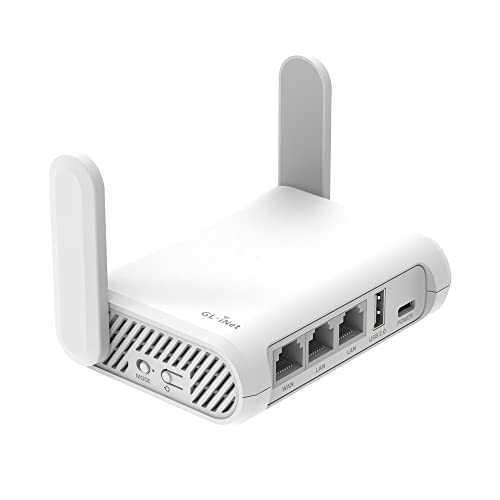
The GL.iNet GL-SFT1200 Opal is not my first choice for a full home network. It is a compact travel router with AC1200 dual-band Wi-Fi. The product listing also highlights three gigabit ports, OpenWrt, and support for OpenVPN and WireGuard. At about 145 grams, it is built for a bag, hotel room, temporary work space, or travel kit.
This device is more advanced than its small size suggests. VPN support can help a traveler route devices through a preferred VPN service, but setup takes more learning than a basic home router. It can also help create a private network from a wired hotel connection. I would not buy it as a replacement for a strong whole-home Wi-Fi 6 router unless portability matters most.
Pros:
- Small and light for travel
- Dual-band AC1200 wireless support
- Three gigabit Ethernet ports
- OpenVPN and WireGuard support
- OpenWrt-based flexibility
- Useful for hotel and temporary networks
Cons:
- Not designed as the best whole-home router
- VPN features may feel complex to beginners
- AC1200 is older than Wi-Fi 6
What Amazon Buyers Are Saying
Amazon customers often praise the compact shape, travel value, VPN options, and ability to connect several devices through one network. More technical buyers tend to enjoy the control offered by OpenWrt. Common limits include a learning curve, confusing advanced menus, and the need to understand hotel network rules. Some users also expect home-router range from a product made mainly for portability.
My Recommendation
I recommend the Opal for travelers, remote workers, and VPN users who enjoy learning a few network basics. It is not the best router for beginners who only need simple home Wi-Fi. It is a specialized tool, and it earns a strong score when judged as a travel router.
TEENO Compact Wood Router Tool

The TEENO product is a power tool for woodworking, not a wireless internet router. I include it because the supplied product list uses the word “router” in two different ways. This compact tool lists a 1.25 HP, 6.5 amp motor, six speeds, and a 15-piece bit set. It also includes guides, a dust hood, a case, and support for 1/4-inch and 6 mm bits.
For a new woodworker, a kit like this can provide a low-cost way to try edge work, trimming, and simple grooves. Yet power tools need careful handling. Wear eye protection, secure the workpiece, unplug the tool before changing bits, and follow the manual. Motor power and included bits do not replace good technique, a firm grip, and safe feed speed.
Pros:
- Compact palm-style form
- Six speed settings for varied work
- Includes 15 bits and useful guides
- Supports 1/4-inch and 6 mm bits
- Dust hood and case add practical value
- Useful starter kit for small wood projects
Cons:
- It does not provide Wi-Fi or internet access
- Small routers may struggle with heavy stock
- Beginners must learn safe bit and speed use
What Amazon Buyers Are Saying
Buyers of compact wood routers often value a complete kit, light handling, and the ability to start small projects without buying every accessory separately. Reviews may also mention bit quality, guide fit, vibration, or dust control. Those details can vary by user and material. I suggest checking the latest buyer photos and comments before using the included bits on valuable wood.
My Recommendation
Buy the TEENO only if you mean a woodworking router. It is not relevant to choosing a home Wi-Fi router. As a starter wood tool, the kit offers useful accessories, but I would place safety, bit quality, and control above the listed motor rating.
The Easy Router Handbook

The Easy Router Handbook is also about woodworking. It is a guide to router tools, techniques, and projects. It cannot replace a wireless router, modem, or mesh system. However, it may help a beginner understand router bits, cuts, setup, and project planning before using a wood router such as the TEENO.
A good guide can save material and reduce unsafe trial and error. I would use it alongside the tool manual, not instead of the manual. New woodworkers should look for clear safety steps, simple diagrams, and projects that match their skill level. Always confirm that instructions fit your exact tool and bit size.
Pros:
- Focused on beginner woodworking skills
- May help explain router tools and techniques
- Useful companion for practice projects
- Can support better planning before cutting
- Works as a learning aid for new hobbyists
Cons:
- It is not a networking router
- Book advice may not cover every tool model
- Readers still need the power tool manual
What Amazon Buyers Are Saying
Readers usually judge woodworking books by clear writing, helpful project ideas, and easy instructions. Buyers may also comment on print quality, diagrams, and how well the book serves a first-time user. Since project needs differ, I recommend checking the current review page and sample pages to confirm that the content matches your goals.
My Recommendation
This book makes sense for someone learning wood routing. It does not belong on a shortlist for home Wi-Fi. If your goal is internet access, buy a networking router instead. If your goal is woodworking, this guide may provide a useful starting point when paired with hands-on safety training.
How to Choose the Best Router for Beginners
Choosing the Best Router for Beginners starts with your home size, internet plan, and comfort with technology. Do not shop by the biggest speed number alone. A router must match your devices, wired ports, room layout, and need for simple control.
1. Choose a Home Router or a Travel Router
A home router should cover your main living space and connect many devices each day. Look for dual-band Wi-Fi, gigabit Ethernet ports, and an easy setup app. A travel router has a different job. It should be small, light, and useful with hotel or temporary connections. The GL.iNet Opal is better for travel and VPN use than for replacing a full home router.
Also check the product category before you buy. A wireless router shares an internet connection. A wood router cuts grooves and edges in timber. The names sound alike, but the products have no shared purpose.
2. Match Wi-Fi Features to Your Devices
Wi-Fi 6 can improve network efficiency when many newer devices share the connection. It does not make an old phone reach Wi-Fi 6 speed. Your internet plan also limits online speed. For most first-time home buyers, a dual-band Wi-Fi 6 model such as the Archer AX21 or R6700AX offers a sensible balance.
Check the Ethernet ports too. Gigabit ports help devices that sit near the router. A wired connection can reduce wireless congestion for a desktop, console, or smart TV. If you need more coverage later, check for mesh support before buying.
3. Focus on Setup, Range, and Long-Term Value
A beginner-friendly router should have clear instructions and a simple management method. Put it in an open, central spot. Do not hide it in a cabinet or place it beside a large metal object. These small steps can improve coverage more than chasing a higher advertised speed.
Think about future cost as well. A low price may not help if you soon need extra equipment. A model with mesh support can offer a cleaner upgrade path. Finally, review current firmware, support, warranty, and app terms. These details matter after the first day of setup.
Final Verdict: Which Should You Buy?
For most homes, I recommend the TP-Link Archer AX21 as the Best Router for Beginners. It combines Wi-Fi 6, simple setup, gigabit ports, and EasyMesh support. Choose the NETGEAR R6700AX if its coverage and Nighthawk features fit you better.
The GL.iNet Opal suits travel. TEENO and The Easy Router Handbook are for woodworking, not Wi-Fi. Match the product type to your goal for a smoother, safer purchase.
FAQs Of Best Router for Beginners
What is the best router for a beginner home user?
The TP-Link Archer AX21 is the best overall choice here. It offers Wi-Fi 6, dual-band service, gigabit ports, and EasyMesh support in a beginner-friendly package.
Is Wi-Fi 6 worth it for a first-time router buyer?
Yes, Wi-Fi 6 can help newer devices and busy home networks. Your actual speed still depends on your internet plan, device, distance, and walls.
How do I choose a router for a small apartment?
Choose a dual-band router with simple setup and enough Ethernet ports. Place it in an open central area, then check coverage before buying extra equipment.
Is the GL.iNet Opal good for home internet?
It can work in some small or temporary setups, but it is mainly a travel router. Its VPN and OpenWrt tools suit users who want more control.
What is the difference between a Wi-Fi router and a wood router?
A Wi-Fi router shares an internet connection. A wood router is a power tool that cuts wood. The TEENO and handbook in this review are woodworking products.







[…] NETGEAR RAX36 is a certified refurbished AX3000 Nighthawk router. Its listed wireless speed reaches up to 3 Gbps, placing it above basic Wi-Fi 5 models and below […]
[…] Added to wishlistRemoved from wishlist 0 […]