


The best router for torrenting balances fast Wi-Fi, steady connections, strong security, and simple VPN support.
Large downloads can expose every weakness in a home network. The connection may slow down when several peers connect, video calls may lag, and other family members may lose access to the internet. A good router helps manage that load with modern Wi-Fi, gigabit ports, traffic controls, and stable firmware. I reviewed five practical options for 2026, from affordable Wi-Fi 5 models to a fast Wi-Fi 7 router and a travel router with built-in OpenVPN and WireGuard support. Always share and download only legal content, and remember that a router alone does not make torrenting private.
See the differences between my top picks at a glance.
TP-Link Archer AX21 V5

The TP-Link Archer AX21 V5 is the most balanced choice in this group. It uses Wi-Fi 6 and carries an AX1800 class rating. That gives a typical home more room for phones, smart TVs, laptops, game systems, and download traffic. Its gigabit Ethernet ports also work well with a wired desktop or network storage device.
I like this router for users who want strong everyday value without jumping to Wi-Fi 7. The EasyMesh feature can help expand coverage with compatible TP-Link equipment. It also supports Alexa control and has a setup process aimed at normal home users. Before buying it for whole-network VPN torrenting, check the current firmware and VPN client options, since support can vary by hardware version and software release.
Pros:
- Wi-Fi 6 helps manage busy home networks
- Gigabit ports support fast wired downloads
- EasyMesh can extend coverage with compatible units
- Simple setup suits first-time router buyers
- Good balance of speed, range, and price
- Works with many current Wi-Fi 6 devices
Cons:
- It does not include the fastest multi-gig ports
- VPN client features need careful firmware checking
- Wi-Fi 6 performance depends on compatible client devices
What Amazon Buyers Are Saying
Amazon review patterns for this type of TP-Link router often focus on easy installation, steady wireless coverage, and good value. Buyers commonly like the app-led setup and the improvement over older Wi-Fi 5 routers. Some users report that results depend on wall layout, internet service, and device placement. As with many consumer routers, complaints may involve firmware changes, setup choices, or coverage in larger homes rather than a single universal fault.
My Recommendation
I recommend the Archer AX21 V5 for most people who want a dependable home router for torrenting and normal daily use. It offers enough capacity for many homes, but it is not the best choice for users with a multi-gig internet plan or a firm need for advanced VPN routing. Use a wired connection for the main torrent computer when possible. I rate it highly for value and ease of use.
NETGEAR Nighthawk R6700AX

The NETGEAR Nighthawk R6700AX is a practical Wi-Fi 6 router for a medium home. Its listed coverage is up to 1,500 square feet, and the product is designed for up to 20 devices. It offers an AX1800 class connection and four gigabit Ethernet ports. Those ports make it easy to connect a desktop, smart TV, console, or small wired switch.
This model suits buyers who value a guided setup and a familiar Nighthawk design. A torrent client can create many connections, so stable hardware and sensible device placement matter more than a large speed number alone. I would use wired Ethernet for heavy downloads and enable traffic controls where the firmware provides them. If you plan to run a VPN on the router, confirm the exact client support rather than assuming every VPN service will work.
Pros:
- Wi-Fi 6 provides efficient wireless access for newer devices
- Four gigabit LAN ports support several wired devices
- Listed coverage suits many apartments and smaller homes
- Nighthawk setup tools can make installation easier
- Supports a useful mix of wireless and wired clients
- AX1800 performance fits common broadband plans
Cons:
- Coverage may fall short in larger or multi-floor homes
- Advanced VPN routing may require extra configuration
- Subscription features or account prompts may not suit every buyer
What Amazon Buyers Are Saying
Common buyer feedback around this Nighthawk model highlights quick setup, useful coverage, and a noticeable upgrade from older routers. Many customers value the app because it helps them name devices and manage the network. Some reviews mention limits caused by thick walls, modem settings, or service-provider equipment. Buyers also tend to differ on whether extra software features provide enough value, so check the current package details before purchase.
My Recommendation
The R6700AX is worth considering if you want a straightforward Wi-Fi 6 router with a recognized setup system. It is a good fit for a smaller home with moderate torrent activity and several regular users. It is less attractive for advanced users who need multi-gig Ethernet or clear, built-in whole-home VPN controls. I rate it as a dependable family router with good basic value.
TP-Link Archer BE400 Wi-Fi 7

The TP-Link Archer BE400 is the performance pick in this review. It uses dual-band Wi-Fi 7 and offers a BE6500 class rating. The product listing includes two 2.5Gbps ports, a USB 3.0 port, and coverage of up to 2,400 square feet. It also lists support for up to 90 devices, which makes it appealing for a busy smart home.
This router makes the most sense when your internet plan, wired network, and client devices can use its extra capacity. Wi-Fi 7 does not magically make an old phone faster, but new compatible devices may benefit from newer wireless features. The USB port can add storage or printer options, subject to the router’s software support. For VPN torrenting, review the current HomeShield and firmware features before you buy, because a fast router is not automatically a full VPN gateway.
Pros:
- Wi-Fi 7 gives newer devices more room to grow
- Two 2.5Gbps ports suit multi-gig internet and local networks
- USB 3.0 adds useful storage or sharing options
- Listed coverage can suit larger homes
- High device capacity fits connected households
- Quad-core hardware supports demanding home use
- Private IoT features can help separate smart devices
Cons:
- It costs more than basic Wi-Fi 6 routers
- Older devices cannot use every Wi-Fi 7 benefit
- VPN client support must be checked for your exact setup
- Extra features may be more than a small home needs
What Amazon Buyers Are Saying
Buyers who choose this class of TP-Link router often mention fast wireless results, broad coverage, and the value of multi-gig ports. Users with newer laptops and phones are more likely to notice its strengths. Some customer experiences vary because Wi-Fi 7 depends on client support, channel conditions, and local interference. It is also common for buyers to compare the higher price with their actual internet speed and question whether they need the added headroom.
My Recommendation
I recommend the Archer BE400 for a large or busy home with a fast internet plan and newer devices. It is the strongest hardware choice here for heavy local traffic and future upgrades. It may be excessive for a basic 200 Mbps plan or a small apartment. Buy it for its multi-gig ports and extra capacity, not simply because the Wi-Fi 7 label sounds new.
GL.iNet GL-SFT1200 Opal
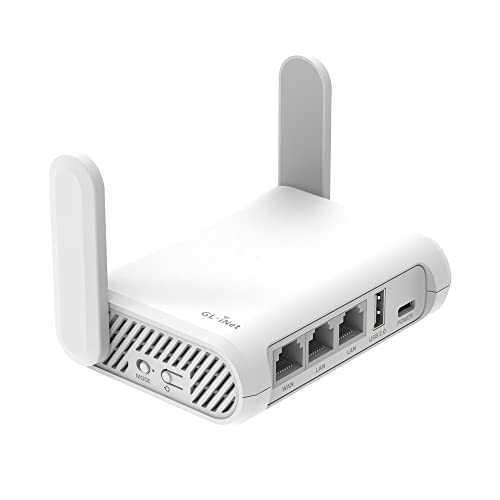
The GL.iNet GL-SFT1200 Opal is different from the other picks. It is a small AC1200 travel router built on an OpenWrt-based platform. It has three gigabit ports and supports OpenVPN and WireGuard, along with many VPN services. Its compact size and low weight make it useful for travel, temporary setups, hotel networks, or a dedicated VPN link.
For users who ask which is the best router for torrenting with simple VPN support, the Opal deserves close attention. It is not the fastest wireless router in this guide, and its small design is not aimed at a large home full of high-speed Wi-Fi 6 clients. Yet the VPN controls are clearer than those on many low-cost home routers. I would use it for a few devices, a travel setup, or a separate torrent machine rather than treating it as the best main router for a large family.
Pros:
- OpenVPN and WireGuard support are built in
- OpenWrt-based controls offer useful flexibility
- Three gigabit ports support wired devices
- Small design works well for travel
- Low weight makes it easy to carry
- Can create a separate VPN network for selected devices
- Useful for hotels, temporary offices, and small apartments
Cons:
- Wi-Fi 5 is older than the other main picks
- VPN encryption can reduce real-world throughput
- Small hardware may not suit many active clients
- Advanced settings take more learning than a basic app
What Amazon Buyers Are Saying
Amazon buyers commonly value the Opal for its small size, VPN features, and ability to work in travel situations. Users who understand routers often praise the control offered by OpenWrt-based software. Some buyers find the setup less simple than a standard home router, especially when changing VPN settings or working with hotel login pages. Reported speed also varies with the VPN protocol, server distance, and the number of connected devices.
My Recommendation
I recommend the Opal when VPN routing matters more than maximum Wi-Fi speed. It is one of the most practical choices for a dedicated VPN connection, travel, or a small apartment. It is not my first choice for a large house, a gigabit-plus wireless plan, or many simultaneous clients. If you want a small router with WireGuard and OpenVPN support, it offers strong value.
TP-Link Archer A6 AC1200

The TP-Link Archer A6 is the budget option. It uses dual-band AC1200 Wi-Fi and includes four external antennas, MU-MIMO, gigabit ports, OneMesh support, and access point mode. These features give it a useful base for a small home or apartment. It can handle normal web use, streaming, and moderate download activity when the network does not have too many active devices.
This router will not match the capacity of a Wi-Fi 6 or Wi-Fi 7 model. Still, it may be enough if your internet plan is modest and your main torrent computer uses Ethernet. The low cost also makes it useful as a spare router or access point. I would not choose it for a large household, a very fast broadband plan, or demanding whole-network VPN work without checking the exact firmware first.
Pros:
- Usually offers strong value for a basic home network
- Gigabit ports support wired torrent clients
- Four external antennas help with general coverage
- MU-MIMO supports multiple compatible devices
- OneMesh can help expand a compatible network
- Access point mode adds setup flexibility
Cons:
- Wi-Fi 5 has less capacity than newer standards
- Not ideal for many simultaneous high-use devices
- VPN client functions may be limited or firmware dependent
- Older wireless clients may not deliver gigabit-class speeds
What Amazon Buyers Are Saying
Buyers often choose the Archer A6 because it costs less than newer Wi-Fi 6 models. Review themes commonly include easy installation, good basic range, and useful gigabit ports. Some customers report that coverage changes sharply with wall materials and router placement. Others expect more speed from the AC1200 label than their devices or internet plan can deliver, so realistic expectations matter with this budget model.
My Recommendation
The Archer A6 is worth buying when price matters most and your network needs are simple. It works best in a small home, apartment, or wired setup with a moderate number of devices. Choose a newer Wi-Fi 6 model if you expect more traffic over the next few years. I rate the A6 as a good low-cost starter, but not the best long-term router for torrenting.
How to Choose the Best Router for Torrenting
Choosing the best router for torrenting involves more than checking the largest speed number on the box. A torrent client may open many connections at once. Other people may stream, work, attend video calls, or play games at the same time. I look for steady routing, enough memory and processing power, useful wired ports, current security updates, and a clear way to manage VPN traffic. I also match the router to the internet plan and the size of the home.
1. Match Wi-Fi and Ethernet Speed to Your Plan
Start with your internet speed. A basic AC1200 router can be enough for a modest plan and a small home. Wi-Fi 6 gives better efficiency when many devices share the network. Wi-Fi 7 makes more sense with newer devices, multi-gig service, or a home that needs extra capacity.
Do not ignore Ethernet. A wired connection usually gives a torrent computer lower interference and steadier performance than Wi-Fi. Gigabit ports cover many homes. The Archer BE400 stands out when you need 2.5Gbps connections for a fast plan or a local file server. A faster port does not increase a slow internet subscription, but it can prevent the router from becoming the limit later.
2. Check VPN, Security, and Traffic Controls
A VPN can hide your public IP address from peers, but the VPN provider still handles your traffic. A VPN also may reduce speed. Look for support for the protocol you plan to use, such as WireGuard or OpenVPN. The GL.iNet Opal is the clearest option in this guide because those protocols are part of its feature set.
For other routers, check the current manual and firmware notes. Do not assume that a router supports a VPN client just because it supports VPN pass-through. These are different features. Also look for guest networks, firmware updates, strong administrator passwords, and automatic security tools. Avoid opening ports unless you understand the risk. Port forwarding can improve incoming peer access in some cases, but it also exposes a service to the internet.
3. Consider Coverage, Device Count, and Long-Term Value
Place the router in an open, central spot. A powerful router cannot fully overcome thick concrete, metal, or a poor location. Use a mesh system or compatible extender when one box cannot cover the home. The Archer AX21 offers EasyMesh support, while the Archer A6 offers OneMesh support for compatible equipment.
Count your real devices. Include phones, cameras, speakers, TVs, consoles, computers, and smart plugs. A small apartment with six active devices does not need the same router as a large family with dozens of connected products. The BE400 is the best fit for a busy network, but the A6 may save money for a light user. Buy the capacity you will use, then keep enough room for future needs.
Final Verdict: Which Should You Buy?
For most homes, I choose the TP-Link Archer AX21 V5 as the best router for torrenting because it balances Wi-Fi 6 speed, gigabit ports, coverage features, and price. Choose the GL.iNet Opal when built-in WireGuard or OpenVPN matters most. Choose the Archer BE400 for multi-gig service and many newer devices.
The right router improves stability, but it cannot replace safe settings or legal use. Pair your choice with wired Ethernet, current firmware, strong passwords, and a trusted VPN when needed for a better torrenting setup.
FAQs Of Best Router for Torrenting
What is the best router for torrenting in 2026?
The TP-Link Archer AX21 V5 is the best overall pick for most homes. The GL.iNet Opal is better when built-in VPN support is the main priority, while the TP-Link Archer BE400 suits multi-gig plans and busy networks.
Do I need a VPN router for torrenting?
You do not need one, but a router with VPN client support can protect selected devices through one central setup. Confirm that the router supports your VPN protocol and expect some speed loss from encryption.
Is Wi-Fi 6 better than Wi-Fi 5 for torrent downloads?
Wi-Fi 6 can handle busy networks more efficiently, especially with compatible devices. A wired connection still offers the most stable link for a main torrent computer.
Can a router improve slow torrent speeds?
A router can remove a local bottleneck, improve wireless stability, and manage many connections. It cannot exceed your internet plan, the torrent swarm’s upload speed, or limits set by your VPN provider.
Should I use port forwarding on a torrent router?
Port forwarding may improve incoming peer access, but it also creates an exposed service. Use it only when you understand the security risk, and keep the torrent software and router firmware updated.










[…] gamers and tech enthusiasts, low latency is a game-changer. A router that effectively minimizes lag can greatly enhance online experiences, making tasks like gaming, […]