

The best firefighting drones provide fast aerial awareness, thermal vision, safe scouting, and reliable control during emergencies.
A fire can change in minutes. Smoke can hide a trapped person, a weak roof, or a fast-moving flame front. I understand why fire crews want an eye in the sky before sending people into danger. The products below are affordable camera drones, not certified fire-suppression aircraft. They can help with training, perimeter checks, post-fire inspection, and basic visual support, but professional teams should use thermal sensors, secure links, trained pilots, and approved emergency procedures.
DJI Mini 4K: Best Compact Camera Drone

The DJI Mini 4K is one of the most capable small drones in this group. Its 4K camera can record clear roof lines, access roads, damaged structures, and smoke-free areas from a safe distance. The under-249-gram design also makes it easy to carry in a response bag. I like this size because it adds very little weight when a crew already carries radios, masks, batteries, and safety gear.
The drone uses a mechanical gimbal to keep video smooth during movement. That matters when an incident commander needs to study a live view instead of watching a shaky image. It is not a thermal drone, and its consumer transmission system may not meet the security needs of a public-safety agency. Still, for visual checks, exercises, roof surveys, and documentation, it offers a strong mix of image quality and portability.
- Sharp 4K video for roof and structure checks
- Lightweight design that is easy to transport
- Gimbal stabilization helps reduce camera shake
- Useful for training drills and post-fire documentation
- Compact body stores well in a vehicle or response kit
- Automatic return features can help during signal concerns
- No thermal camera for seeing through smoke
- Not built to fly near heat, flames, or heavy ash
- Small consumer batteries need careful charging and rotation
My Recommendation
I recommend the DJI Mini 4K for departments that need a simple visual drone for inspection and training. It suits a trained operator who wants clear footage without carrying a large aircraft. Among the Best Drones for Firefighting: Top Picks for Safety and Efficiency, this is one of the best choices for low weight and good daylight video. Its overall value is strong, but buyers should confirm FAA rules, local flight limits, and agency policy before use.
DJI Mini 4K Combo: Best for Longer Training Sessions

This DJI Mini 4K combo adds two batteries, a useful benefit for long practice days. A single battery may cover only one short flight after wind, cold weather, return-to-home reserve, and setup time reduce the usable window. With two batteries, a crew can land, replace the pack, and continue a planned inspection. The package also includes a stabilized 4K camera and a long-range video system marketed for up to 10 kilometers in ideal conditions.
I see this package as a better training tool than the single-battery version. A crew can practice mapping a building, check several angles, and repeat a flight path without waiting as often. The drone remains a daylight camera platform, not a heat-resistant emergency aircraft. Long advertised range also does not mean a pilot should fly beyond visual line of sight or ignore local airspace rules.
- Two batteries support longer practice and inspection work
- 4K video captures useful daylight detail
- Three-axis stabilization improves flight footage
- QuickShot modes can help new pilots learn basic movements
- Foldable design fits well in a compact equipment case
- Light weight reduces the burden on mobile crews
- Camera cannot detect heat or hidden fire spots
- Long-range claims depend on terrain, interference, and legal limits
- Extra batteries still require safe storage and charging
My Recommendation
The DJI Mini 4K Combo is best for fire academies, volunteer departments, inspectors, and teams that expect repeated practice flights. I would choose it when battery turnaround matters more than the lowest purchase price. In this Best Drones for Firefighting: Top Picks for Safety and Efficiency review, the combo stands out for training value and practical flight time. It remains unsuitable for flying into smoke columns, close to power lines, or over active flames.
Before buying, compare some of the top-performing drones we recommend.
2K HD FPV Drone: Best Budget Training Option

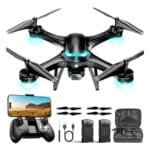
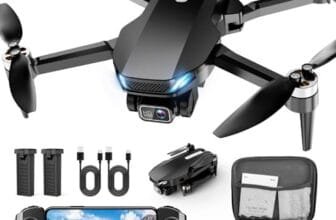
This 2K HD FPV drone targets beginners who need a low-cost way to learn basic control. It includes altitude hold, one-key takeoff and landing, speed adjustment, headless mode, and two batteries. Those features can help a new operator learn steady hovering before moving to more advanced aircraft. For a department that wants a simple practice drone, that can be a useful first step.
I would use this model in an open training area, not at an active fire scene. Its camera may help a trainee understand framing, approach paths, and basic visual checks, but it will not deliver the detail or stability of a higher-end DJI platform. The light body may also react to wind more strongly. That limitation becomes important near buildings, trees, smoke, and emergency vehicles.
- Lower cost makes group training more accessible
- Two batteries provide extra practice time
- Altitude hold helps beginners learn stable hovering
- Speed adjustment supports gradual skill development
- One-key takeoff and landing simplify early flights
- Headless mode can reduce control confusion for new pilots
- 2K video has less detail than a quality 4K camera
- Small aircraft may struggle in wind
- Basic stabilization may produce shaky footage
- It lacks thermal sensing and professional flight safeguards
My Recommendation
I recommend this drone for a beginner class, youth education program, or small volunteer station that needs hands-on practice at a modest price. It is best for learning control, not for making life-safety decisions. When comparing the Best Drones for Firefighting: Top Picks for Safety and Efficiency, this model wins on entry cost and simple controls. I would keep it as a training aircraft while using a more advanced system for real incident support.
FPV Drone with Built-In Controller Screen
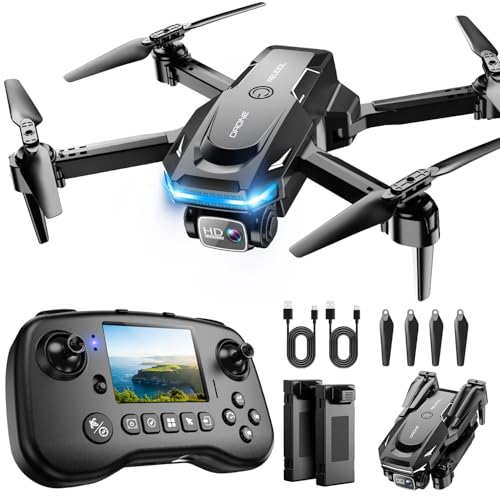
This type of drone may work well for learning short inspection routes around a station or training site. It should not replace a certified public-safety UAS with a thermal payload, strong wind rating, encrypted communications, and formal maintenance records. Built-in screens also vary in brightness, so direct sun may make the image hard to read. I would test the controller, range, battery life, and return function before relying on it outdoors.
- Built-in screen reduces dependence on a phone
- FPV view helps new pilots understand aircraft direction
- Simple controls can support quick practice flights
- Compact size makes it easy to store and carry
- Useful for basic site familiarization and visual learning
- Can serve as a low-cost backup training drone
- Screen visibility may drop in bright sunlight
- Consumer FPV systems may have limited signal reliability
- No thermal payload for smoke or hot-spot detection
- Small airframes are not suited to strong wind or hot air
My Recommendation
This FPV drone is best for a beginner who wants a ready-to-fly view without using a separate smartphone. It can help a station teach orientation, hovering, and short route planning. In my Best Drones for Firefighting: Top Picks for Safety and Efficiency list, I see it as a convenient practice unit rather than a frontline response tool. Buy it when ease of setup matters, and use it only within a safe, controlled operating area.
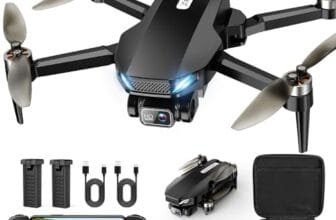
UHD Brushless FPV Drone: Best Beginner Feature Set

This foldable drone combines an LCD screen controller, a brushless motor design, and UHD live video features. Brushless motors often run more smoothly and may last longer than simple brushed motors, although actual results depend on build quality and care. The foldable frame is convenient for storage in a locker, truck, or training bag. Support for a 32GB card can also help users save short clips for review.
The feature list is attractive for a first drone, but I would set realistic expectations. A small consumer aircraft cannot safely operate in the hot, turbulent air above a structure fire. Its camera may record a useful daylight view, yet it cannot show a hidden victim or a hot wall through smoke. For training, basic roofline observation, and equipment familiarization, it offers more features than many toy-grade models.
- Brushless motors may provide smoother operation
- Built-in LCD controller screen supports phone-free use
- Foldable frame stores easily in small spaces
- UHD video can support basic daylight review
- 32GB card support helps save training clips
- Under-250-gram design may simplify some recreational operations
- UHD labeling does not equal professional image quality
- No heat camera, obstacle avoidance, or fire-rated body
- Wind performance may be limited by the small frame
- New pilots still need practice before outdoor flights
My Recommendation
I would choose this model for beginners who want a screen, storage support, and brushless motors in one package. It is a practical learning tool for controlled areas and short daylight flights. In the Best Drones for Firefighting: Top Picks for Safety and Efficiency comparison, it offers a useful feature balance for training. Its value depends on safe use, since no feature makes a consumer drone suitable for flame exposure or smoke penetration.
What Makes a Drone Useful for Firefighting?
A firefighting drone does more than fly. It must give a crew useful information without creating another hazard. The best professional systems usually combine a stable aircraft, a reliable camera, thermal imaging, strong navigation, good battery planning, and a trained operator. A low-cost camera drone can support some tasks, but it cannot match a public-safety platform built for heat, darkness, rain, or complex airspace.
The first key feature is the payload. A standard camera shows color and shape in visible light. A thermal camera shows heat differences. That can help a trained team look for hot spots, overheated equipment, fire extension, or a person who stands out from a cooler background. Thermal images still need careful interpretation. A hot roof, sunlit wall, steam cloud, or reflective surface can confuse an untrained user.
The second feature is flight stability. Fire scenes create hard conditions. Wind moves around buildings. Smoke reduces sight. Radio traffic can increase. A stable aircraft with precise control gives the pilot a better chance to hold position and keep the camera pointed at the right place. Gimbal stabilization also helps the command team read the video.
The third feature is safe operation. A return-to-home function can help if the signal drops, but the pilot must set the home point correctly and check the return height. A drone that returns through a crane, tree, wire, or smoke plume may create a new problem. I always treat automatic functions as support tools, not substitutes for a trained operator.
The fourth feature is battery planning. A drone may advertise a long maximum flight time under ideal conditions. Wind, cold, payload weight, repeated climbs, and a reserve for landing reduce real flight time. A response kit should include charged batteries, a safe charging plan, spare propellers, a landing zone, and a way to record battery cycles.
The fifth feature is the data link. Fire crews may need to share video with an incident commander. A weak link can freeze the image at the worst moment. A secure system can also matter when video shows private homes, victims, or sensitive infrastructure. For environmental monitoring needs such as Best Drones for Air Quality Monitoring, agencies should review privacy, cybersecurity, storage, and access rules before using them during real incidents.
How I Evaluated the Best Drones for Firefighting
I looked at each drone as a tool, not as a toy with a camera. I considered image quality, size, controls, battery support, stability, storage, and likely use in a fire-service training program. I also separated useful features from marketing terms. For example, “long range” does not remove the need for visual line of sight, and “4K” does not mean the camera can see through smoke.
I also checked the safety gap between consumer drones and emergency-service aircraft. The products in this review are not fireproof. Do not fly them into flames, close to a burning roof, over a wildland fire, or through a smoke column. Heat can damage plastic, motors, batteries, sensors, and electronics before the pilot sees a problem.
The FAA controls many drone operations in the United States. Depending on the flight, the pilot may need to follow Part 107, Remote ID rules, airspace limits, altitude limits, and temporary flight restrictions. Emergency response can involve special procedures, but a department should coordinate with the proper authority rather than assume an emergency removes all requirements. A fire scene may also contain helicopters, aircraft, power lines, cranes, and falling debris.
I also considered how a product fits a real budget. A small drone can teach a new pilot how to read wind, plan a route, and maintain visual contact. That experience has value. It should not, however, be confused with the capability of a thermal enterprise drone used by a trained public-safety team.
Firefighting Drone Features That Matter Most
Thermal Imaging
Thermal imaging is often the most important upgrade for fire work. It can reveal heat patterns that a standard camera misses. Crews may use it to inspect a roof after knockdown, locate a hot spot, check a wall for fire travel, or scan a large area during a wildland response. The camera does not replace a hand-held thermal imager or a firefighter’s judgment. It adds distance and a wider view.
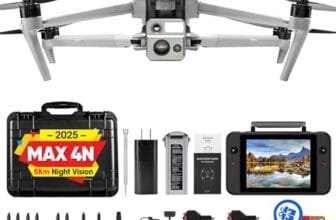
None of the five products reviewed here includes a verified thermal payload. That fact should guide your purchase. If your main goal is active incident response, search for a professional UAS made for public safety rather than selecting a small camera drone based on price alone.
Wind and Weather Performance
A drone near a structure fire faces wind, dust, ash, heat, and moisture. Consumer mini drones may work well on calm days, but their small size can make them harder to control in gusts. Check the manufacturer’s wind guidance and avoid pushing the aircraft beyond it. Never treat water resistance as protection from hose spray, rain, steam, or corrosive smoke.
Obstacle Awareness
Obstacle sensing can help a pilot avoid trees, walls, and other objects. It does not detect every wire, branch, antenna, or moving aircraft. Smoke can also make visual judgment difficult. I recommend a spotter, a clear takeoff zone, and a planned flight path even when the drone includes automated sensing.
Night Operation
Night flights require extra skill. A visible-light camera may show little detail in dark areas, while a thermal camera may show heat but not the full shape of an object. A pilot also needs strong lighting at the launch point and clear communication with the crew. Follow FAA requirements for night operations and complete agency-approved training before attempting them.
Flight Logging and Maintenance
A professional program should log flights, battery cycles, repairs, firmware changes, and unusual events. Inspect propellers after every hard landing. Check the battery for swelling or damage. Keep sand and ash away from motors. A simple maintenance routine can prevent a small equipment issue from becoming a lost aircraft over a roadway or fire line.
Best Use Cases for These Consumer Drones
These drones can support several low-risk tasks when used by a trained pilot. A station may use one to record a building before a drill, inspect a training tower, or show recruits how wind affects a small aircraft. After a fire, a drone can document exterior damage from a safe location. It may also help an inspector view a roof, chimney, or tall structure without climbing at once.
They can also support public education. A department can record a controlled training exercise and explain how crews work. A volunteer team can practice communication between a pilot, a spotter, and an incident leader. These exercises build habits that matter more than flashy flight tricks.
I would not use these models to search a smoke-filled building, fly above an active wildfire, track a moving vehicle in traffic, or make a go-or-no-go decision about structural safety. They do not have the sensors, redundancy, heat protection, or secure control systems needed for those tasks. The safest drone is the one used within its limits.
Best for Comparison
Best for | Why |
|---|---|
Professional visual inspection | The DJI Mini 4K offers clear 4K video, a gimbal, and a portable body for daylight checks. |
Longer beginner training | The DJI Mini 4K Combo includes two batteries, so pilots can practice more before stopping to recharge. |
Low-cost learning | The 2K HD FPV drone provides simple controls, two batteries, and beginner modes at a lower entry price. |
Safety Rules Before Flying Near a Fire Scene
First, ask who controls the airspace. A fire scene may have a news helicopter, medical aircraft, police aircraft, or other emergency drone nearby. One drone can distract from another aircraft and create a serious collision risk. The pilot should keep a clear line of communication with the incident command structure and stop immediately when aircraft enter the area.
Second, choose a safe launch and recovery point. Keep the aircraft away from hose lines, moving trucks, crowds, overhead wires, and falling material. Do not launch beside an unstable wall or under a smoke plume. The pilot needs a clear view of the drone at all times unless the operation has the proper authorization and equipment for a different flight mode.
Third, plan for battery failure. Set a conservative return level and land before the battery reaches a critical state. Cold weather can reduce battery performance. Heat can damage a battery quickly. Store packs in a safe case, inspect them often, and follow the maker’s charging instructions.
Fourth, protect the people shown in the video. Fire scenes can reveal private homes, medical events, license plates, and victims. Use approved storage and limit access to the footage. Do not post incident video online without proper permission. Good data practice protects the public and the department.
Fifth, never let a drone replace a firefighter’s direct assessment. A camera view is only one piece of information. Smoke can hide depth. A thermal image can show heat without explaining its cause. Structural engineers, fire officers, and trained crews must make decisions with the full scene in mind.
Consumer Drone Versus Professional Firefighting UAS
A consumer drone usually focuses on portability, ease of use, and a good camera. It may fold into a small case and cost far less than a professional system. While models in the Best Drones for Adventure category share similar portability, these units are useful here for training and low-risk visual work, helping a department build pilot skills before investing in a larger program.
A professional firefighting UAS adds features that support public safety. These may include a thermal camera, zoom camera, obstacle sensing, stronger wind performance, redundant systems, secure video links, weather protection, replaceable payloads, and support contracts. Some systems use a tether for long station time. Others carry spotlights, speakers, mapping sensors, or specialized tools.
The difference is not just the aircraft. A professional program includes training, standard operating guidelines, airspace coordination, data handling, maintenance, insurance, and command integration. A cheap drone cannot create that system by itself. The aircraft is one part of a larger safety plan.
This is why I describe the products here as supporting tools. They are among the Best Drones for Firefighting: Top Picks for Safety and Efficiency only when the task is visual, controlled, and within their limits. For active fire attack, search work, or specialized environmental tasks like Best Drones for Water Sampling, a department should review purpose-built public-safety options.
Buying Guide: How to Choose the Right Model
Start with the task. If you need basic practice, a low-cost 2K model may be enough. If you need clear daylight footage and smoother movement, the DJI Mini 4K makes more sense. If your team expects several flights in one session, the combo package adds useful battery support.
Next, consider the pilot. A first-time flyer benefits from altitude hold, speed settings, one-key takeoff, and a clear controller screen. A more experienced pilot may value camera quality, gimbal movement, stable transmission, and manual control. Do not buy a complex aircraft if your department has no plan to train or maintain it.
Then consider the environment. Open fields and calm weather suit small beginner drones. Urban areas, forest edges, tall structures, and windy roofs demand more caution. If your local conditions often include wind, rain, dust, or low light, a basic mini drone may not be the right primary platform.
Look at the complete cost. Add spare batteries, a charger, memory cards, propellers, a case, landing protection, and training time. A drone that costs less at checkout may cost more if replacement parts are hard to find. Check whether the maker offers manuals, firmware support, and clear battery instructions.
Finally, check legal and agency needs. The under-250-gram category can affect certain recreational requirements, but it does not mean every flight is free from rules. Public-safety work, commercial work, operations near people, and flights in controlled airspace may require added steps. Check current FAA guidance and local policy before deployment.
Common Mistakes Fire Departments Should Avoid
One mistake is buying a drone because the camera number looks high. A 4K label describes resolution, not thermal ability, dynamic range, zoom, or low-light performance. A stable 1080p image may help more than a shaky 4K clip. Think about what the incident commander needs to see.
Another mistake is flying too close to heat. Batteries can fail, plastic can deform, and motors can lose performance. A drone may look fine on the screen while its internal parts suffer damage. Keep distance and use a professional aircraft when the mission requires close thermal work.
A third mistake is skipping practice. New pilots often focus on the screen and lose awareness of the aircraft. Practice hovering, landing, return-to-home, battery changes, and emergency procedures in calm conditions. Add wind and obstacles only after the pilot shows control.
A fourth mistake is ignoring other aircraft. A drone can climb into the path of a helicopter in seconds. The pilot must follow the command structure, watch the sky, and land when the situation changes. No video is worth adding risk to an already dangerous scene.
A fifth mistake is failing to review footage. Video can help a crew spot gaps in a flight plan, learn better camera angles, and improve communication. Save useful clips in an approved location. Remove or protect files that contain private information.
FAQs Of Best Drones for Firefighting: Top Picks for Safety and Efficiency
Can these drones fly through smoke or near flames?
No. These consumer drones are not fireproof or heat-rated. Smoke, hot air, ash, steam, and flames can damage the aircraft and make control unsafe. Use them only at a safe distance in suitable conditions.
Do any of these drones have thermal cameras?
No. The listed products use visible-light cameras. A thermal firefighting drone needs a dedicated infrared payload and an operator who knows how to read thermal images.
Are small drones under 249 grams automatically legal for fire use?
No. Weight can affect certain rules, but it does not remove all FAA requirements. Airspace, purpose, location, Remote ID, night flight, operations near people, and agency policy still matter. Check current rules before every mission.
Which drone is best for a fire department on a budget?
The 2K HD FPV drone is the most budget-friendly training choice. For better daylight footage, the DJI Mini 4K offers a stronger camera and more stable video. Neither should serve as the only aircraft for active emergency response.
Is a consumer drone useful after a fire?
Yes, when conditions are safe and the pilot is trained. It can document exterior damage, inspect roof areas, record a training review, or provide a broad daylight view. It should not replace a structural assessment or in-person safety check.
Final Verdict: Which Should You Buy?
The DJI Mini 4K Combo is my top choice because its 4K camera, gimbal, compact body, and two batteries offer the best balance. It is ideal for training and safe visual inspections, not active flame work.
For a low-cost learning tool, choose the 2K FPV model. The Best Drones for Firefighting: Top Picks for Safety and Efficiency should always be matched to the mission, pilot, rules, and risk level.



[…] motors are also used in specialized models designed for emergency services — learn more in Best Drones for Firefighting for a deeper look at drones built to handle extreme […]
[…] flips, gesture control, and professional-grade capabilities found in the Best Drones for Police and Best Drones for Firefighting.Military-graded designs ensure durability in rugged environments. With varying flight times and […]
[…] monitoring, making them invaluable for both residential and commercial security, and some of the best drones for firefighting also rely on similar aerial monitoring capabilities. With features like GPS navigation, […]