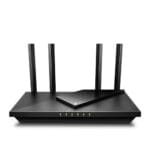
The best router for business use delivers stable connections, strong security, useful controls, and room to grow.
A weak router can slow a busy office, drop video calls, and leave guests or smart devices on the wrong network. I looked at seven practical options for small offices, shops, remote teams, travel work, and home businesses. These picks cover fast Wi-Fi 7, business VPN routing, mesh coverage, low-cost Wi-Fi 6, and portable cellular access. Your best choice will depend on office size, internet speed, wired ports, security needs, and whether you need one fixed router or a mobile connection.
See the differences between my top picks at a glance.
| Router | Wireless Type | Best For | Key Business Feature | Ports / Access | Buy |
|---|---|---|---|---|---|
| Tenda BE12Pro | Wi-Fi 7, dual-band | Fast small offices | MLO, VPN, private IoT network | 2× 2.5G ports | View on Amazon |
| ASUS ExpertWiFi EBR63 | Wi-Fi 6, AX3000 | Small business networks | Guest portal, SDN, remote management | Gigabit-class wired ports | View on Amazon |
| TRENDnet TWG-431BR | Wired business router | Multi-WAN offices | Load balancing, VLAN, VPN | 5 Gigabit ports, console | View on Amazon |
| BLIYEE AX3000 | Wi-Fi 6, dual-band | Budget offices | VPN support, easy setup | 4 Gigabit ports | View on Amazon |
| TP-Link Deco BE23 | Wi-Fi 7, BE3600 | Wider office coverage | Mesh, MLO, wired backhaul | 2× 2.5G ports | View on Amazon |
| Unlocked 4G LTE Hotspot | 4G LTE mobile Wi-Fi | Travel and backup use | Portable cellular access | Up to 16 connections | View on Amazon |
| 2025 Portable Wi-Fi Hotspot | Portable mobile Wi-Fi | Field work and trips | Pocket-sized internet access | Wireless access; verify plan | View on Amazon |
Tenda BE12Pro Wi-Fi 7 Router

The Tenda BE12Pro is a strong choice for a small business that wants newer Wi-Fi 7 features without moving to a large enterprise system. The listing identifies it as a BE7200 dual-band router with two 2.5G ports. It also uses a quad-core CPU and supports Multi-Link Operation, or MLO. MLO can help compatible devices use more than one wireless link for better speed and response.
I also like its private IoT network, VPN support, and OpenWRT support. Those tools give an owner more control over work devices, guest devices, and smart equipment. The two 2.5G ports make more sense for fast fiber service or a wired network than basic 1G ports. Still, Wi-Fi 7 benefits depend on client devices, channel conditions, and local rules, so older laptops will not gain the full advantage.
Pros:
- Modern Wi-Fi 7 support for compatible devices
- Two 2.5G network ports
- Private IoT network helps separate smart devices
- VPN support for safer remote access
- Quad-core processing platform
- OpenWRT support may appeal to advanced users
Cons:
- Wi-Fi 7 benefits require compatible client devices
- Advanced OpenWRT use may require technical skill
- Dual-band design may offer less spectrum flexibility than tri-band systems
What Amazon Buyers Are Saying
The product listing highlights speed, Wi-Fi 7, MLO, VPN tools, and private IoT support. Buyer experiences can vary with the internet plan, device mix, and setup skill. I recommend checking current Amazon feedback for firmware behavior, range, and setup before ordering, since these points can change with updates and home layouts.
My Recommendation
I recommend the Tenda BE12Pro for a small office with fast internet and several newer wireless devices. It is less ideal for a buyer who wants a simple plug-and-play system with no advanced settings. Overall, it offers a good balance of speed and control for the price class.
ASUS ExpertWiFi EBR63 Business Router

The ASUS ExpertWiFi EBR63 focuses on small business tools rather than only headline speed. It uses Wi-Fi 6 with an AX3000 class rating and supports a custom guest portal. That guest portal can help a shop, clinic, studio, or office provide controlled visitor access. The router also supports software-defined networking features, often called SDN, for easier network grouping.
ASUS lists remote management, VPN, VLAN support, and commercial-grade security features for this model. It can also scale with ExpertWiFi AiMesh equipment when one router does not cover the full site. That makes it a useful starting point for a growing office. Buyers should still check the exact port layout, subscription terms, and supported features in the current app before purchase.
Pros:
- Designed around small business network needs
- Custom guest portal for visitors and customers
- VLAN support for network separation
- Remote management can reduce on-site work
- VPN support for remote access needs
- Can expand through the ExpertWiFi AiMesh system
Cons:
- Wi-Fi 6 is not as new as Wi-Fi 7
- Advanced business settings may take time to learn
- Mesh expansion adds cost
What Amazon Buyers Are Saying
The listing centers on setup, remote management, guest access, VPN, VLAN, and security. Those are useful signs for business buyers, but they do not replace a review of current customer comments. Pay close attention to reports about app setup, firmware updates, range, and the way the guest portal works in your type of business.
My Recommendation
This ASUS model is one of my best-balanced picks for a small office that needs clear business features. I would choose it over a basic home router when guest access and network separation matter. It earns a strong score, especially for owners who plan to expand later.
TRENDnet TWG-431BR Multi-WAN Router

The TRENDnet TWG-431BR is the most business-focused wired router in this guide. It has five Gigabit ports and a console port for management. Its feature list includes multi-WAN support, load balancing, high availability, QoS, inter-VLAN routing, dynamic routing, and VPN functions. This design suits an office that values reliable wired control over the latest wireless standard.
Multi-WAN can let a business use more than one internet connection, subject to the supported setup and provider rules. Load balancing may spread traffic, while failover can help keep key work online when one line has trouble. QoS can give important traffic a higher priority. This router is not the right pick for buyers who expect built-in fast Wi-Fi, because you may need separate access points.
Pros:
- Strong set of business routing features
- Multi-WAN support for balancing or backup links
- Inter-VLAN routing for organized networks
- QoS helps manage busy traffic
- Console port supports direct administration
- High-availability features suit uptime-focused offices
Cons:
- Does not serve as a modern all-in-one Wi-Fi router
- Setup may be too complex for casual users
- Gigabit ports may limit newer multi-gig internet plans
What Amazon Buyers Are Saying
The product information clearly targets network administrators and small businesses that need multi-WAN, VPN, VLAN, and routing control. Before buying, I would study current buyer comments about firmware, documentation, and configuration time. Results can differ greatly based on the internet providers and network design used.
My Recommendation
I recommend the TWG-431BR when wired reliability, dual internet lines, and network control matter most. It is a poor fit for a simple wireless office unless you also plan to add access points. For the right administrator, it remains one of the strongest business tools here.
BLIYEE AX3000 Wi-Fi 6 Router

The BLIYEE AX3000 is a lower-cost Wi-Fi 6 option for a home office, small shop, or light business network. The listing includes four high-gain antennas and four Gigabit ports. It also lists easy setup and VPN support. Those features can cover common needs such as laptops, printers, phones, cameras, and wired desktop computers.
This router makes the most sense when the internet plan stays within Gigabit-class limits and the office does not need advanced enterprise controls. Wi-Fi 6 can handle many everyday devices more smoothly than older Wi-Fi generations. However, the listing gives less detail about business management than the ASUS or TRENDnet models. I would treat it as a value router, not a full enterprise gateway.
Pros:
- Wi-Fi 6 support at a budget-focused position
- Four Gigabit ports for wired devices
- Four high-gain antennas
- VPN support adds useful flexibility
- Simple setup may suit new users
- Works for basic home-office and small-shop tasks
Cons:
- Fewer stated business controls than premium picks
- Wi-Fi 6 offers less future-proofing than Wi-Fi 7
- Actual coverage depends on walls, placement, and interference
What Amazon Buyers Are Saying
The listing emphasizes easy setup, antenna design, Gigabit ports, and VPN support. Since lower-cost routers can vary by firmware and support quality, I suggest checking recent customer comments before purchase. Look for useful details about signal range, setup instructions, and long-term stability rather than focusing only on the advertised speed.
My Recommendation
I would buy the BLIYEE for a small operation that needs basic Wi-Fi and wired access without a large budget. I would not choose it for a complex office with VLANs, dual internet lines, or strict central management. It is a sensible value pick when expectations stay realistic.
TP-Link Deco BE23 Wi-Fi 7 Mesh Router

The TP-Link Deco BE23 is a good fit for an office where one router may not cover every room. This one-pack mesh unit uses Wi-Fi 7 and has a BE3600 class rating. The listing states coverage of up to 2,500 square feet, though real coverage changes with walls, floors, and interference. It also includes two 2.5G ports for fast internet or wired backhaul.
Mesh expansion gives this model a clear advantage in long offices, multi-room studios, and small workspaces with dead zones. MLO can improve performance for compatible Wi-Fi 7 clients, while VPN and HomeShield add useful network tools. The one-pack version is only the starting point if you need a larger mesh. Check whether a feature requires a paid service before relying on it for business security.
Pros:
- Wi-Fi 7 support for newer client devices
- Mesh design helps extend coverage
- Two 2.5G ports support fast wired links
- Wired backhaul can improve mesh consistency
- VPN and HomeShield features add useful controls
- Suitable for offices with rooms or coverage gaps
Cons:
- One pack may not cover a large or complex building
- Full Wi-Fi 7 gains require compatible devices
- Some security features may have service limits
What Amazon Buyers Are Saying
The product details focus on coverage, mesh expansion, Wi-Fi 7, MLO, 2.5G ports, and wired backhaul. Those features address common office complaints about weak rooms and slow wireless links. I would review current Amazon comments for app reliability, roaming, and the cost of adding more Deco units before placing an order.
My Recommendation
The Deco BE23 is my preferred choice for a small office that needs wider wireless coverage and may grow into a mesh system. It is not the best pick for an administrator who needs deep wired routing controls. For mixed rooms and newer devices, it offers strong long-term value.
Unlocked 4G LTE Mobile Hotspot

This unlocked 4G LTE hotspot serves a different role from the fixed routers above. It gives a small team internet access through a compatible cellular SIM instead of a home or office broadband line. The listing states speeds up to 300 Mbps, support for up to 16 devices, and a 2,100mAh battery. It also claims up to 12 hours of use, but network signal and traffic can change battery life.
I see this as a useful travel router, event tool, or emergency backup. It can help when a primary connection fails or when staff work at a temporary site. You must confirm carrier bands, SIM rules, data limits, and plan costs before buying. Cellular speed can vary sharply with location, tower load, signal strength, and the mobile provider.
Pros:
- Portable alternative to fixed broadband
- Supports up to 16 connected devices according to the listing
- Claimed 300 Mbps maximum cellular speed
- Battery-powered design suits travel and field work
- Claimed 12-hour battery use
- Useful as a temporary or backup connection
Cons:
- Requires a compatible cellular plan and SIM
- Real speed depends on tower and signal conditions
- May not provide the controls of a fixed business router
What Amazon Buyers Are Saying
The listing highlights portability, battery life, device capacity, and LTE speed. Since compatibility matters more than a wireless speed label, I would read current buyer feedback about carrier setup and signal performance. Pay special attention to comments from users on your intended network and in locations like yours.
My Recommendation
I recommend this hotspot for mobile workers, pop-up offices, and backup access. I would not use it as the only connection for a busy permanent office without testing the carrier signal first. It is a practical companion to the best router for business use, not a replacement for every fixed network.
2025 Portable Wi-Fi Hotspot Router

This portable Wi-Fi hotspot targets users who need internet away from a normal office. Its small form should fit travel bags, field kits, and temporary work areas. The listing presents it as a high-speed mobile internet device for travel, outdoor use, and business trips. That makes it a specialist product rather than a normal home-office gateway.
The main appeal is flexibility. A portable hotspot can help a salesperson, contractor, event worker, or remote employee connect several devices without using public Wi-Fi. However, the listing gives limited detail about the mobile technology, carrier support, battery size, and data plan. I would confirm all of those points before treating it as a business-critical connection.
Pros:
- Small design suits travel and field work
- Can create a private connection away from public Wi-Fi
- Useful for temporary work sites and business trips
- May connect several work devices through one access point
- Simple alternative to sharing a phone connection
Cons:
- Important carrier and plan details need verification
- Mobile performance changes by location
- Limited product information makes planning harder
What Amazon Buyers Are Saying
The product title focuses on portable access and business travel. Because mobile hotspots depend on service plans and local coverage, I would read recent customer comments with special care. Look for reports on activation, battery behavior, device limits, and connection stability before purchase.
My Recommendation
This hotspot may suit occasional travel or outdoor work when you confirm compatibility first. I would not rank it above a fixed Wi-Fi 6 or Wi-Fi 7 router for a permanent office. It earns value from mobility, not from advanced business routing.
How to Choose the Best Router for Business Use
Choosing the best router for business use starts with your network plan, not the biggest speed number on the box. Count your users, work devices, guest devices, printers, cameras, and wired systems. Then match the router to your internet speed, office layout, security needs, and support skills. A small office may need simple Wi-Fi and a guest network. A growing company may need VLANs, VPN access, multi-WAN failover, and remote management.
1. Match the Router to Your Office Traffic
First, check your internet service and daily workload. Video meetings, cloud backups, point-of-sale systems, file transfers, and security cameras can compete for bandwidth. A router with QoS can help set traffic priorities. A wired multi-WAN router may make more sense when downtime costs money. For a simple office, Wi-Fi 6 may be enough. For newer devices and fast fiber, Wi-Fi 7 and 2.5G ports offer more room to grow.
Do not confuse the advertised wireless class with actual internet speed. The label describes a theoretical combined capacity under ideal conditions. Walls, distance, interference, client hardware, and the internet provider all affect real results. I also suggest using Ethernet for fixed computers, network storage, printers, and other devices that do not need mobility.
2. Check Security and Network Separation
A business router should do more than share a password. Look for guest access, automatic updates, VPN support, firewall controls, and a way to separate work devices from IoT equipment. VLAN support gives more control in a managed network. A private IoT network can keep smart plugs, cameras, and other devices away from work laptops.
Guest portals can help stores, clinics, salons, and offices offer visitor Wi-Fi without exposing internal systems. Remote management can also save time when the owner cannot visit the site. Still, read the terms for cloud services and security subscriptions. A feature is more useful when you understand its cost, support life, and setup needs.
3. Consider Coverage, Ports, and Long-Term Value
Measure the office before choosing a router. One strong unit may cover a small open room, while a long or divided space may need mesh nodes or wired access points. Wired backhaul often gives a mesh system a steadier link than a wireless connection between nodes. Place the main router in a central, open area rather than inside a cabinet or behind large equipment.
Count the ports you need today, then add a few for growth. Two 2.5G ports can help with fast fiber, a multi-gig switch, or a wired backhaul. A router with only Gigabit ports may still work well for a basic plan. Finally, compare the purchase cost with support, extra mesh units, service plans, and replacement time. The best router for business use is the one that stays stable and manageable after the first week.
Final Verdict: Which Should You Buy?
For most small offices, I would choose the ASUS ExpertWiFi EBR63 for its guest portal, VPN, VLAN, remote management, and mesh path. Choose the TRENDnet TWG-431BR for serious wired multi-WAN control, or the TP-Link Deco BE23 for broader Wi-Fi coverage.
The best router for business use should match your traffic, space, and support skills. Review carrier terms for hotspots and feature terms for security services before you buy.
FAQs Of Best Router for Business Use
What is the best router for business use in a small office?
The ASUS ExpertWiFi EBR63 is a strong small-office choice because it includes guest access, VPN, VLAN, remote management, and mesh expansion.
Is Wi-Fi 7 better than Wi-Fi 6 for a business?
Wi-Fi 7 can offer newer features and more capacity, but compatible devices and a fast internet plan are needed to gain the full benefit.
Do I need a business router with VPN support?
VPN support can help with secure remote access or protected connections. Your exact needs depend on your staff, software, and company security plan.
Is a mesh router good for a business office?
Yes. Mesh can improve coverage across several rooms. Use wired backhaul when possible for a steadier link between mesh units.
Can a mobile hotspot replace a business router?
It can serve travel teams or temporary sites, but a fixed router usually offers better ports, controls, coverage, and long-term capacity.