The best router for fiber internet delivers fast Wi-Fi, strong coverage, and reliable service without slowing your fiber plan.
Fiber internet can feel wasted when an old router causes weak signals, lag, or dropped connections. I have seen this often in homes with gigabit plans, many smart devices, and several people online at once. The right router helps your phone, TV, laptop, game console, and work computer share the connection with less trouble. My top picks include affordable Wi-Fi 6 models and newer Wi-Fi 7 routers. I also checked port speed, coverage, device limits, setup, security tools, and long-term value.
See the differences between my top picks at a glance.
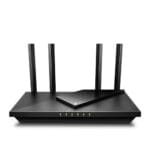
TP-Link Archer AX21 V5 Wi-Fi 6 Router

The TP-Link Archer AX21 V5 is a simple and affordable way to improve a fiber home network. It uses Wi-Fi 6 and offers an AX1800 class connection on two bands. Its gigabit ports suit many fiber plans up to about 1 Gbps, depending on the internet provider and network setup. This makes it a sensible pick for apartments, small homes, and families that do not need multi-gig wired speeds.
I also like its EasyMesh support because it gives you a path to expand coverage with compatible equipment. The Alexa support may help users who want simple voice control. Like any router, it needs a separate fiber ONT or gateway when the provider does not supply a combined unit. It is not the most future-ready choice, but it gives strong value for normal fiber service.
Pros:
- Affordable entry point for fiber Wi-Fi
- Wi-Fi 6 helps manage newer devices
- Gigabit ports fit many standard fiber plans
- EasyMesh support allows future expansion
- Simple design and setup for everyday users
- Works with Alexa for added convenience
Cons:
- It lacks multi-gig Ethernet ports
- Coverage may not suit a large or tall home
- Advanced users may want more premium controls
What Amazon Buyers Are Saying
Buyer comments commonly focus on easy setup, steady daily performance, and good value. Many users choose it for streaming, web use, video calls, and regular smart-home devices. Some buyers report better results after replacing an older Wi-Fi 5 router. Common concerns include limited reach through thick walls and the need to check settings during setup. Results can vary with home layout, interference, and the fiber provider’s equipment.
My Recommendation
I recommend the Archer AX21 V5 for a basic fiber plan and a small or medium home. It is a practical choice when you want Wi-Fi 6 without paying for features you will not use. Choose a newer Wi-Fi 7 model if your plan exceeds gigabit speeds or you expect many upgrades soon.
NETGEAR Nighthawk BE9300 Wi-Fi 7 Router

The NETGEAR Nighthawk BE9300 targets busy homes that need more room for many wireless devices. It offers tri-band Wi-Fi 7 and a listed speed of up to 9.3 Gbps. The router includes two 2.5G ports and two gigabit ports, so it can better match a fast fiber connection than a basic gigabit router. Its stated coverage reaches up to 2,500 square feet.
This model can make sense for a family that streams, works from home, plays online games, and uses smart-home gear at the same time. Wi-Fi 7 devices can take better advantage of its newer wireless features, while older devices can still connect. The real benefit depends on your clients, plan speed, and home layout. I would not buy it only for a large speed number if your current devices use older Wi-Fi standards.
Pros:
- Tri-band Wi-Fi 7 design
- Up to 9.3 Gbps listed wireless capacity
- Two 2.5G ports support faster wired links
- Rated coverage up to 2,500 square feet
- Designed for up to 100 devices
- Easy setup suits less technical users
Cons:
- Wi-Fi 7 benefits require compatible devices
- It costs more than a basic Wi-Fi 6 router
- Large homes may still need mesh expansion
What Amazon Buyers Are Saying
Common buyer themes include fast wireless performance, a clean setup process, and improved capacity in homes with many devices. Users who own newer phones and laptops tend to show the most interest in the Wi-Fi 7 features. Some buyers mention that placement has a major effect on coverage. Others note that older client devices may not show a dramatic speed increase. As with all router feedback, internet plan speed and device support shape the result.
My Recommendation
This is a strong middle-ground pick for a busy home with a fast fiber plan. I like the two 2.5G ports because they give the router more room to grow. It is worth buying when you want Wi-Fi 7 but do not need the larger coverage and higher port level of a premium flagship.
TP-Link Archer BE600 Wi-Fi 7 Router

The TP-Link Archer BE600 is one of the most flexible routers in this group. It combines tri-band Wi-Fi 7 with a 10G port, one 2.5G port, and three 2.5G LAN ports. That port mix makes it especially appealing for multi-gig fiber service, local network storage, and fast wired computers. TP-Link lists coverage up to 2,600 square feet and support for up to 120 devices.
Its 320MHz channel support can help compatible Wi-Fi 7 devices use wider wireless channels. The router also includes VPN features, HomeShield security tools, and a design aimed at larger homes. Buyers should still check subscription terms for any optional security service. I see this as a strong all-rounder for people who want both fast wireless access and useful wired networking.
Pros:
- 10G port suits high-speed fiber service
- Three 2.5G LAN ports support fast local devices
- Tri-band Wi-Fi 7 offers strong upgrade potential
- Listed coverage reaches up to 2,600 square feet
- Supports up to 120 devices
- Includes VPN and HomeShield features
Cons:
- It may be too advanced for a small apartment
- Compatible Wi-Fi 7 devices cost more
- Some security features may depend on service terms
What Amazon Buyers Are Saying
Buyer discussions often praise the port selection, setup flow, and strong results with newer devices. Multi-gig users tend to value the 10G connection and several 2.5G LAN ports. Some users report that the router needs careful placement to reach the best coverage. Others point out that older phones and laptops cannot use every Wi-Fi 7 feature. These are normal limits of a new wireless standard, not a sign that every home needs the same hardware.
My Recommendation
I recommend the Archer BE600 as the best router for fiber internet among these picks for many multi-gig homes. It gives you excellent port flexibility without moving to the largest premium class. If you want one router that can support fast internet, wired devices, and future upgrades, this is my leading choice.
TP-Link Archer BE400 Wi-Fi 7 Router

The TP-Link Archer BE400 offers a useful middle path between affordable Wi-Fi 6 and high-end Wi-Fi 7. It uses dual-band Wi-Fi 7 and includes two 2.5Gbps ports. TP-Link rates it for coverage up to 2,400 square feet and up to 90 connected devices. It also includes a USB 3.0 port, which adds value for homes that share storage or a printer over the network.
This router fits a medium home that wants newer wireless technology without paying for a tri-band flagship. Its quad-core processor should help with everyday routing tasks, while HomeShield and a private IoT network add useful controls. Dual-band operation may limit peak capacity compared with tri-band models in a very busy home. Still, many households will find its balance of speed, ports, and price attractive.
Pros:
- Wi-Fi 7 upgrade at a moderate level
- Two 2.5Gbps ports support fast connections
- USB 3.0 adds storage and sharing options
- Listed coverage reaches up to 2,400 square feet
- Private IoT network improves smart-device separation
- Quad-core hardware supports daily network tasks
Cons:
- Dual-band design has less capacity than tri-band models
- It supports fewer devices than the BE600
- USB sharing may require extra setup
What Amazon Buyers Are Saying
Common buyer feedback highlights the easy app setup, clean design, and strong results for regular streaming and work use. Users also like having 2.5G ports in a router that does not sit at the top of the price range. Some buyers want more advanced control over network settings. Others find that the best results come after placing the unit in an open, central spot. Device support remains important because older clients cannot use every Wi-Fi 7 feature.
My Recommendation
The Archer BE400 is a good value choice for a medium home with a fast fiber connection. I would choose it over a basic Wi-Fi 6 router when you want 2.5G wired speed and a path toward newer devices. Choose the BE600 instead if your home has many active users or needs tri-band capacity.
NETGEAR Nighthawk RS700S Wi-Fi 7 Router

The NETGEAR Nighthawk RS700S is the most powerful router in this review. NETGEAR lists up to 19 Gbps, coverage up to 3,500 square feet, and support for up to 200 devices. It uses tri-band Wi-Fi 7 and includes one 10G port plus three gigabit ports. This combination targets large homes, demanding users, and fiber plans that may grow beyond ordinary gigabit service.
The large coverage claim can reduce the need for extra hardware, but walls, floors, interference, and router placement still matter. The single 10G port is useful for a high-speed WAN or one fast wired device, though users with several multi-gig wired devices may want more 2.5G LAN ports. This router costs more than the other choices. I see its value in scale, capacity, and long-term headroom rather than basic browsing.
Pros:
- Very high listed wireless capacity
- Tri-band Wi-Fi 7 design
- Coverage rated up to 3,500 square feet
- Supports up to 200 devices
- One 10G port supports extreme wired speed
- Good fit for large and busy homes
Cons:
- Higher cost than most home routers
- Only one 10G port is listed
- Its power may exceed the needs of smaller homes
What Amazon Buyers Are Saying
Buyer feedback often centers on fast performance, broad coverage, and a smooth setup process. Large-home users tend to appreciate the extra capacity and the ability to connect many devices. Some buyers mention that placement still affects performance despite the high coverage rating. Others question the value if their internet plan and devices cannot use the available speed. That concern is fair: a premium router works best when the rest of the network can match it.
My Recommendation
I recommend the RS700S for a large home, a very busy network, or a buyer who wants a premium Wi-Fi 7 platform for years. It is not the best value for a small apartment or a basic fiber plan. If you need maximum coverage and high capacity from one router, it deserves serious attention.
NETGEAR Nighthawk R6700AX Wi-Fi 6 Router

The NETGEAR Nighthawk R6700AX is a practical Wi-Fi 6 router for a smaller home. Its listed wireless class is AX1800, with coverage up to 1,500 square feet and support for up to 20 devices. Four gigabit ports make it useful for wired TVs, desktops, consoles, and other fixed equipment. It can pair well with a standard fiber plan when you do not need multi-gig performance.
This model focuses on simple daily networking rather than advanced Wi-Fi 7 capacity. It should suit browsing, HD or 4K streaming, video calls, and casual gaming in a small space. The 20-device rating is more limited than the newer routers in this list, so heavy smart-home users should look higher. I would also place it in an open area to help the signal reach every room.
Pros:
- Affordable Wi-Fi 6 performance
- Four gigabit ports for wired devices
- Coverage rated up to 1,500 square feet
- Simple fit for apartments and small homes
- Useful for standard fiber plans
- Easy setup for first-time router buyers
Cons:
- Designed for only up to 20 devices
- No 2.5G or 10G port is listed
- Less future-ready than Wi-Fi 7 options
What Amazon Buyers Are Saying
Buyers commonly like the simple setup, steady connection, and four wired ports. Many users see it as a clear upgrade from an older router for ordinary home use. Some comments point to limited range in larger homes or through dense walls. Other buyers expect higher speeds from a fiber plan than the router can deliver over gigabit ports. That is why I would match this model to a small home and a standard-speed plan.
My Recommendation
The R6700AX is a sound budget option for a small space. It gives you Wi-Fi 6 and four gigabit LAN ports without the cost of a premium model. I would not select it for a large family, multi-gig fiber, or a home with many smart devices.
How to Choose the Best Router for Fiber Internet
Choosing the best router for fiber internet starts with your fiber plan, not the biggest number on the box. Fiber service enters the home through an optical network terminal, often called an ONT. You usually connect the router’s WAN port to the ONT with Ethernet. Some providers use a combined gateway, so check the provider rules before you buy. The FCC notes that advertised internet speed and real home performance can differ because of equipment, Wi-Fi, and network conditions.
1. Match the WAN and LAN Ports to Your Fiber Speed
Port speed matters most for wired fiber service. A router with gigabit Ethernet fits many plans up to 1 Gbps. A 2.5G port gives more room for plans above gigabit and fast local devices. A 10G port makes more sense for premium multi-gig service or a home server.
Do not confuse total wireless speed with one device’s speed. Router makers add the speeds of several bands to create a class number. Your phone may use only one band. Walls, distance, interference, and the phone’s own Wi-Fi radio also affect results. For a normal 1 Gbps plan, the Archer AX21 or R6700AX may work well. For multi-gig fiber, look at the BE600 or RS700S.
2. Choose Wi-Fi 6 or Wi-Fi 7 for Your Devices
Wi-Fi 6 remains a good choice for many homes. It handles newer phones, laptops, TVs, and smart devices well. It also costs less than Wi-Fi 7. If your current devices use Wi-Fi 5, you may still see better network management after an upgrade, but you may not reach the router’s top speed.
Wi-Fi 7 gives more upgrade room. It can help compatible devices use newer wireless features and wider channels. Yet the benefit grows over time as you replace older equipment. A Wi-Fi 7 router is a smart choice for a new home network, a fast fiber plan, or a buyer who keeps routers for many years. The BE400 offers a lower-cost entry, while the BE600 and RS700S offer more capacity.
3. Consider Coverage, Device Count, and Security
Coverage numbers are useful guides, not guarantees. A concrete wall, metal appliance, second floor, or poor router position can reduce signal strength. Place the router near the center of the home, off the floor, and away from large metal objects. If the home is long or has several levels, choose EasyMesh support or plan for a mesh system.
Count active devices, not just people. A home may have phones, laptops, cameras, speakers, lights, TVs, consoles, and appliances online all day. The BE600 and RS700S suit heavier use. The AX21 and R6700AX suit smaller networks. Also check parental controls, firmware updates, guest Wi-Fi, VPN tools, and IoT options. Strong security helps protect every device connected to your fiber network.
Final Verdict: Which Should You Buy?
For most multi-gig homes, I choose the TP-Link Archer BE600. It offers Wi-Fi 7, a 10G port, several 2.5G ports, and strong coverage. For a small home, the AX21 V5 or R6700AX delivers better value.
The best router for fiber internet should match your plan, devices, home size, and budget. Buy the features you can use today, with enough room for tomorrow.
FAQs Of Best Router for Fiber Internet
Do I need a special router for fiber internet?
You need a router with a compatible Ethernet WAN port. Most homes connect the router to the provider’s ONT. Confirm the provider’s equipment and connection rules before buying.
Is Wi-Fi 7 worth it for a gigabit fiber plan?
It can be worth it if you own newer devices or want more future headroom. For older devices and basic use, a good Wi-Fi 6 router may offer better value.
What router port speed is best for multi-gig fiber?
Choose at least a 2.5G port for a plan above 1 Gbps. A 10G port makes sense for faster service or a network with high-speed wired devices.
Can a fiber router improve slow Wi-Fi?
Yes, if the old router limits speed, coverage, or device capacity. Placement, walls, interference, and the client device also affect Wi-Fi performance.
Which is the best router for fiber internet in this review?
The TP-Link Archer BE600 is my top overall choice for its Wi-Fi 7 support, 10G port, multiple 2.5G ports, coverage, and balanced value.