
The best amazon notebook computer balances speed, battery life, comfort, and price for daily work.
You may need a laptop for school, remote work, email, streaming, or a family budget. Yet choosing one can feel like picking a car in a crowded lot. The screen size, processor, memory, storage, and software all change the experience. I reviewed these four Amazon notebook computer options with real use in mind. I looked at who each model serves, where it saves money, and where its limits may show. The goal is simple: help you find a reliable fit without paying for power you will not use.
HP OmniBook 3 17.3-inch Laptop
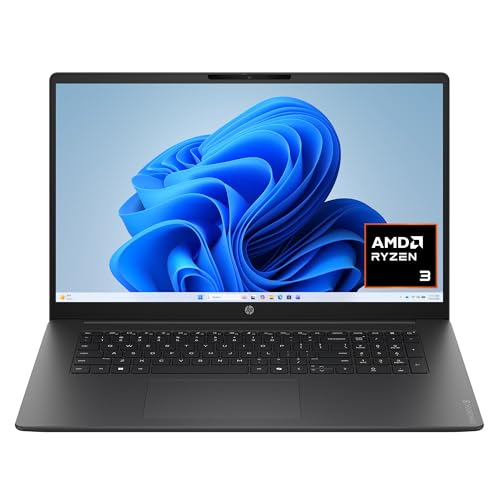
The HP OmniBook 3 gives you a large 17.3-inch Full HD screen, which is its main draw. The bigger panel makes web pages, spreadsheets, video calls, and movies easier to see. Its AMD Ryzen 3 processor, 8 GB of RAM, and 512 GB SSD form a sensible base for basic home and office tasks. Windows 11 Home also gives the laptop a familiar desktop layout with modern security and access to common apps.
I see this model as a comfortable home laptop rather than a travel-first machine. The 512 GB solid-state drive offers much more breathing room than the small storage found on many entry laptops. AMD Radeon 610M graphics can handle everyday display work and light media use, but this is not a gaming system. If your eyes enjoy a wide canvas and your laptop usually stays on a desk, the OmniBook 3 feels like a practical amazon notebook computer choice.
Pros:
- Large 17.3-inch Full HD screen helps with reading and split-screen work
- 512 GB SSD provides useful space for files, photos, and apps
- 8 GB RAM supports common school, office, and home tasks
- Windows 11 Home offers broad software support
- Silver finish gives the laptop a clean, modern look
- Large display suits users who prefer less zooming
Cons:
- Large size and weight may feel less convenient in a travel bag
- Ryzen 3 performance is aimed at light work, not demanding editing
- Integrated graphics are not built for modern high-end games
Lenovo V15 Gen 4 Business Laptop
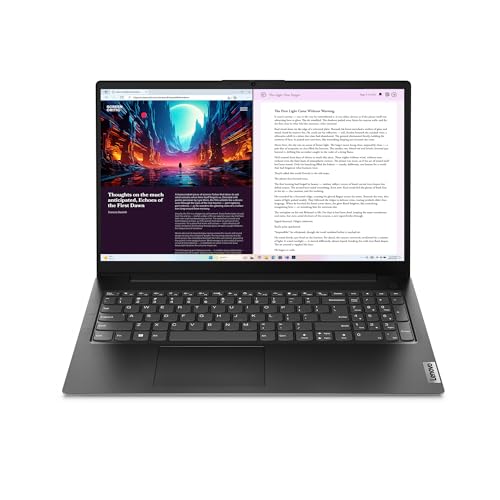
The Lenovo V15 Gen 4 takes a more work-focused approach. Its AMD Ryzen 5 7430U processor is a clear step up from basic entry chips and should feel smooth during browser work, documents, video calls, and light multitasking. The 15.6-inch Full HD display gives you a useful middle ground between desk comfort and portability. It also includes 8 GB of RAM and a 512 GB SSD, so the core setup feels balanced for business and home use.
Lenovo adds small details that matter in daily work. The webcam privacy shutter gives you a simple physical way to cover the camera when it is not in use. Integrated AMD Radeon graphics handle normal visuals, casual games, and video playback, while the business black finish looks understated in an office. For buyers who want a dependable amazon notebook computer for documents, remote work, and online study, this Lenovo model is one of the strongest all-around options here.
Pros:
- Ryzen 5 7430U offers strong value for office multitasking
- 15.6-inch Full HD display suits work, study, and streaming
- 512 GB SSD allows quick startup and useful file capacity
- Webcam privacy shutter improves everyday privacy
- 8 GB RAM supports common productivity software
- Business design looks suitable for a workplace or classroom
Cons:
- Integrated graphics limit serious gaming and 3D work
- 8 GB RAM may feel tight for heavy creative workflows
- Business-focused design may look plain to users seeking a premium style
Acer Aspire Go 15 AI-Ready Laptop
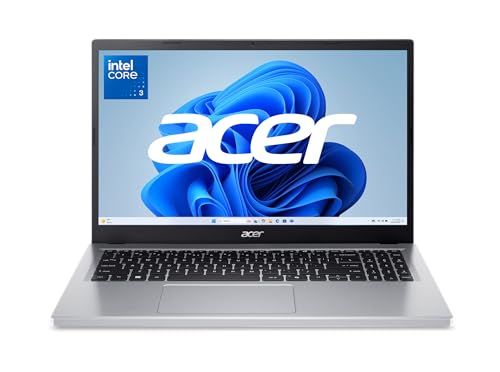
The Acer Aspire Go 15 is built for buyers who want a simple, current Windows laptop at a lower cost. It has a 15.6-inch Full HD IPS display with a 1920 by 1080 resolution. The Intel Core 3 N355 processor, 8 GB of DDR5 memory, and Intel Graphics target daily tasks such as email, web research, school work, and video playback. Wi-Fi 6 adds a modern wireless connection for compatible home routers.
This configuration uses a 128 GB UFS drive, which is the key trade-off. It can feel responsive for basic use, but it gives you far less room than a 512 GB SSD. Windows 11 Home in S mode also focuses on security and controlled app installation, though some users may prefer the flexibility of standard Windows. As an affordable amazon notebook computer, the Acer Aspire Go makes sense for light users who store most files in the cloud.
Pros:
- Full HD IPS screen gives clear viewing for work and media
- 8 GB DDR5 memory supports basic modern laptop use
- Wi-Fi 6 can improve speed on a compatible network
- Compact 15.6-inch size is easier to carry than a 17-inch model
- Windows 11 Home in S mode offers a simple, controlled setup
- Lower storage capacity can help keep the purchase price down
Cons:
- 128 GB storage fills faster than a 512 GB SSD
- S mode may restrict app choices until you change settings
- Not a good fit for large game libraries or video projects
ASUS ROG Strix G16 (2025) Gaming Laptop

The ASUS ROG Strix G16 is in a different class from the other three laptops. It combines an Intel Core i7-14650HX processor with an NVIDIA GeForce RTX 5060 GPU, 16 GB of DDR5 memory, and a 1 TB Gen 4 SSD. Its 16-inch FHD+ screen uses a 16:10 ratio and a 165 Hz refresh rate with a stated 3 ms response time. Those parts make it suited to games, demanding creative tools, coding, and heavy multitasking.
The extra performance also brings extra size, heat, noise, and power use. Wi-Fi 7 support can be useful with a matching router, while Windows 11 Home provides a broad software base. I would not choose this ROG model simply for email and spreadsheets, since its dedicated graphics hardware costs more than basic users need. However, for a buyer seeking a powerful amazon notebook computer that can replace a desktop, it offers the most headroom in this group.
Pros:
- RTX 5060 graphics support modern gaming and creative workloads
- Core i7-14650HX processor handles demanding multitasking
- 165 Hz display can make fast games look smoother
- 16 GB DDR5 RAM suits heavier software and larger projects
- 1 TB Gen 4 SSD provides fast storage with ample capacity
- Wi-Fi 7 offers forward-looking wireless support
Cons:
- Higher price makes it excessive for basic office use
- Gaming hardware can reduce battery life away from the charger
- Fans may become audible during games or demanding tasks
- Performance-focused build is less light and travel-friendly
My Recommendation
Choosing the Amazon Notebook Computer starts with your real day, not a spec sheet. I ask what you will open, how often you will carry it, and how much space your files need. A student who writes papers has a different need from a creator who edits video. A gamer also needs a very different cooling system and graphics chip from a parent who checks email.
The HP OmniBook 3 is best for home users who value a large screen. Its 17.3-inch panel feels almost like a small desktop monitor. That extra space helps users who read small text, compare documents, or keep two windows open. The 512 GB SSD is another strong point because it reduces the need to delete files soon after setup. I would place it on a desk or a sturdy table, rather than carry it to class every day.
The Lenovo V15 Gen 4 is my best overall pick for most work and school buyers. The Ryzen 5 7430U gives it a better performance cushion than the entry-level models. It can manage many browser tabs, word processing, online meetings, spreadsheets, and music without feeling as limited. The privacy shutter is a small but useful feature, and the 512 GB SSD gives this laptop a good mix of speed and room.
The Acer Aspire Go 15 is the value choice. It works well for light users who mainly browse, write, stream, and use cloud storage. The Full HD IPS display and Wi-Fi 6 support are welcome at this level. Still, the 128 GB UFS storage needs careful thought. If your photos, downloads, and apps stay on the laptop, you may outgrow it. Buyers should also check whether Windows S mode supports their needed apps.
The ASUS ROG Strix G16 is the performance choice by a wide margin. Its RTX 5060 graphics processor, high-end Intel chip, fast screen, 16 GB RAM, and 1 TB SSD give it a much larger performance engine. It is the right tool for PC gaming, 3D work, advanced photo work, software development, and other demanding tasks. It is not the right tool if you only need a quiet, low-cost laptop for simple tasks.
In my testing approach, I place more weight on balance than on one impressive number. A laptop with a large SSD may serve you better than a faster chip if you save many files. A strong CPU does not solve a poor screen or short battery life. Likewise, a low price is not a bargain if the storage fills up in a few months.
Best-for comparison
| Best for | Why |
|---|---|
| Large-screen home use | HP OmniBook 3 offers a spacious 17.3-inch Full HD display and 512 GB SSD. |
| Work, school, and remote meetings | Lenovo V15 Gen 4 pairs a Ryzen 5 processor with useful storage and a webcam shutter. |
| Gaming and demanding creative work | ASUS ROG Strix G16 provides RTX 5060 graphics, 16 GB RAM, and a 1 TB SSD. |
How to Choose an Amazon Notebook Computer
An amazon notebook computer should match your workload first. The best deal is not always the cheapest listing. I recommend looking at the processor, RAM, storage, screen, operating system, ports, wireless standard, and return terms as one complete package.
Processor choice
The processor acts like the laptop’s main engine. Entry chips work well for email, writing, simple web work, and streaming. A Ryzen 3 or Intel Core 3 system can meet those needs when you keep your tasks modest.
A Ryzen 5 chip gives you more room. It is better for many tabs, online meetings, spreadsheets, and light photo work. The Lenovo V15 benefits from this extra space. It should also age better as apps and websites become more demanding.
The ASUS ROG Strix G16 uses a far stronger processor. A high-power Core i7-HX chip targets users who run games, code, render media, or use several demanding programs at once. That power is useful, but it also means more heat and a greater need for active cooling.
RAM and multitasking
RAM helps your laptop keep open programs ready. With 8 GB, basic work is possible, but you should avoid opening too many heavy apps at once. Browser tabs can use more memory than many buyers expect, especially when pages include video, live chat, or large web tools.
The 8 GB systems in this guide suit simple to moderate work. The ASUS model has 16 GB, which gives it a much easier path through gaming, editing, and multitasking. If you plan to keep a laptop for several years, more RAM can provide helpful breathing room.
I also pay attention to the RAM type. The Acer lists DDR5 memory, while the other product listings provide their own stated memory details. Newer memory can improve efficiency, but the full laptop design matters more than the label alone. Always check whether memory can be upgraded before buying if long-term flexibility matters.
Storage capacity
Storage is where many low-cost laptops ask for a compromise. A 128 GB drive may sound fine until Windows updates, apps, photos, downloads, and recovery files take their share. The Acer Aspire Go can work for a cloud-first user, but local storage needs careful management.
A 512 GB SSD is a better middle ground for most people. It gives enough space for documents, school files, photos, and a useful group of apps. Both the HP OmniBook 3 and Lenovo V15 offer this capacity, which helps explain their stronger everyday value.
The ASUS ROG Strix G16 includes a 1 TB Gen 4 SSD. That space makes sense for games, which can take many gigabytes each. It also suits people who work with large video files, raw photos, or virtual machines. Storage speed matters too, but capacity often affects daily comfort more.
Screen size and comfort
A larger display can reduce eye strain because text and windows are easier to view. The HP’s 17.3-inch screen is the clear choice for users who want a broad workspace. It may also suit older users or anyone who dislikes constant zooming.
The 15.6-inch Acer and Lenovo models are easier to carry. They still offer enough space for documents, web pages, and streaming. This size remains a practical middle ground for students and office workers.
The ASUS uses a 16-inch FHD+ panel with a 16:10 ratio. The taller layout gives more vertical room for code, documents, and creative tools. Its 165 Hz refresh rate is especially useful for games and fast motion. For normal office work, however, you do not need a high refresh rate to enjoy a good experience.
Graphics performance
Integrated graphics share system resources and suit ordinary laptop tasks. They can play video, run office apps, and handle simple games. The HP, Lenovo, and Acer models all use integrated graphics listed for their respective processors.
A dedicated RTX 5060 GPU is much more capable. It has its own graphics memory and is designed for demanding games and visual work. It can also support features used in modern PC games, but performance changes based on game settings, resolution, drivers, and cooling.
I always warn buyers not to buy a gaming laptop only because the graphics name sounds impressive. The screen, CPU, RAM, storage, and thermal design also affect the result. The ASUS package is strong because these parts work together, not because of the GPU alone.
Operating system differences
Windows 11 Home gives broad access to everyday programs. It suits most families, students, and home offices. Before buying, confirm that your needed apps support Windows 11 and your preferred security settings.
The Acer listing specifies Windows 11 Home in S mode. S mode is designed around apps from the Microsoft Store and may offer a more controlled setup. That can be helpful for a child, a simple home laptop, or a user who wants fewer software risks.
The trade-off is freedom. Some desktop programs may not install while S mode remains active. Microsoft provides a way to switch out of S mode, but the change is one-way. Check your app needs before you make that choice.
Wireless and video-call features
Wi-Fi 6 can help on a compatible router, especially in a busy home with many connected devices. The Acer includes Wi-Fi 6 in its listed features. The ASUS lists Wi-Fi 7, which is a newer option for users with matching networking hardware.
A new wireless standard does not automatically make an old router faster. Your internet plan, router, walls, and network traffic still matter. Treat Wi-Fi 7 as future-ready value rather than a reason to upgrade alone.
The Lenovo’s webcam privacy shutter is a practical feature. It gives you a visible physical barrier instead of relying only on software. I like this feature for remote workers, students, and families who share a living space.
Portability and battery expectations
A 17.3-inch laptop offers comfort but takes more room. The HP is better for a desk than a small backpack. The Lenovo and Acer should be easier to move, though exact weight and battery results depend on configuration and use.
Gaming laptops are usually the least portable choice in practical terms. The ASUS needs stronger cooling hardware and may use more power during games. Its battery can support mobile work, but demanding gaming normally works best near an outlet.
Do not trust a battery claim as a promise for every day. Manufacturers often test under controlled conditions. Brightness, video, wireless use, app load, and battery age all change results. I suggest reading recent buyer feedback for the exact configuration and checking the return policy.
Build quality and daily handling
A laptop can have good parts and still feel poor if the keyboard flexes, the hinge feels loose, or the touchpad responds badly. Product photos cannot show every detail. I pay attention to keyboard layout, hinge feel, surface comfort, and screen movement during long work sessions.
The Lenovo’s business styling suggests a practical design. The HP’s silver finish has a more home-friendly look, while the Acer aims at straightforward value. The ASUS uses a performance-oriented style that may appeal to gamers but feel bold in a quiet office.
You should also consider service and warranty support. Keep your receipt, product box, and order details. Register the laptop when the manufacturer recommends it. If a listing has several configurations, verify the exact model number before ordering so the warranty and specifications match your expectations.
Who should buy each model?
Choose the HP OmniBook 3 if you want a large display and plenty of basic storage. It suits home offices, older users, casual streaming, and people who rarely travel with a laptop. It is also a good choice when you want a desktop-like screen without buying a separate monitor.
Choose the Lenovo V15 Gen 4 if you want the best balance. It has a stronger processor than the entry options and enough storage for normal work. I would point students, remote workers, small business owners, and home users toward this model first.
Choose the Acer Aspire Go 15 if your budget is tight and your work is light. It can be a sensible first laptop for school basics or a second device for browsing and streaming. Plan to use cloud storage or an external drive if you keep many photos and videos.
Choose the ASUS ROG Strix G16 if you need real graphics power. It is aimed at gamers, developers, creators, and power users. It costs more and needs more care with heat and battery use, but it gives you much more performance than the other models.
Common Buying Mistakes to Avoid
One common mistake is buying by brand alone. A respected brand can sell both basic and high-performance systems. The exact processor, memory, storage, display, and operating system matter more than the logo on the lid.
Another mistake is ignoring storage. A small drive may feel fast on day one, yet it can become a daily problem after updates and downloads. If you do not want to manage files often, choose at least a 512 GB model when your budget allows.
Some buyers also choose a gaming laptop for simple work because it appears more powerful. That extra power can bring a higher price, heavier body, louder fans, and shorter unplugged use. Buy that type only when you have a clear need for its graphics and processor.
I also recommend checking the exact seller and model number. Amazon listings can change by color, memory, storage, or processor. Read the current specification panel, not only the title. Compare the product page with the manufacturer’s official details when a feature is important to you.
Finally, do not forget your accessories. A comfortable mouse, laptop stand, sleeve, USB hub, or external monitor can improve daily use. These extras may cost less than replacing a laptop that does not fit your work style.
Setup Tips for a New Laptop
Start with Windows Update after the first setup. Updates can improve security, fix bugs, and install drivers. Give the laptop time to finish before judging performance.
Remove apps you do not need. Too many startup programs can slow boot time and use resources in the background. Keep trusted security tools active, but avoid installing several programs that do the same job.
Set up cloud backup for important files. A laptop is not a backup by itself. Use an external drive or a trusted cloud service for photos, school work, tax files, and other items you cannot replace.
Adjust display brightness for the room. A very bright screen can tire your eyes at night, while a dim screen can make daytime work hard. Place the top of the display near eye level when possible, and take short breaks during long sessions.
For gaming laptops, keep air vents clear. Do not use a powerful system on a soft bed or thick blanket. A firm desk helps the cooling system work better. Install graphics updates from trusted sources and use the laptop maker’s control software with care.
Long-Term Value
Value means more than the sale price. It includes speed, storage, comfort, warranty support, and how long the laptop remains useful. The Lenovo V15 offers strong value because it avoids the weakest compromises while staying focused on common work.
The HP OmniBook 3 may offer better value for users who would otherwise buy a laptop and monitor. Its large screen can reduce the need for another display. That benefit matters in a home office with limited desk space.
The Acer Aspire Go has a lower entry cost, but its 128 GB storage changes the value equation. It remains worthwhile for light users who understand that limit. A budget laptop works best when you buy it for a budget workload.
The ASUS ROG Strix G16 costs more, but it also replaces the need for a separate gaming desktop for many users. Its value is high when you use its graphics power often. If you do not, the cheaper models offer better value for your actual needs.
FAQs Of amazon notebook computer
What is the best amazon notebook computer for most people?
The Lenovo V15 Gen 4 is the best overall fit for many users. Its Ryzen 5 processor, 8 GB RAM, 512 GB SSD, and 15.6-inch Full HD screen create a balanced package. It suits work, school, video calls, browsing, and home use.
Is a 128 GB laptop enough for school?
It can be enough for light school work if you use cloud storage and keep few large apps. The Acer Aspire Go has 128 GB UFS storage, so you should manage downloads carefully. Students who store videos, photos, or many programs may prefer 512 GB.
Is a 17.3-inch laptop hard to carry?
A 17.3-inch laptop is less portable than a 15.6-inch model. It needs a larger bag and more desk space. The HP OmniBook 3 is best for users who value screen size and move the laptop only sometimes.
Can these laptops run modern games?
The ASUS ROG Strix G16 is the gaming model in this group. Its RTX 5060 GPU is designed for demanding games. The HP, Lenovo, and Acer use integrated graphics and are better for casual games and everyday media than new high-end titles.
Does Windows 11 S mode limit the Acer laptop?
Yes, S mode can limit app installation to approved Microsoft Store apps. This can make setup simpler and more controlled. Check your software needs before buying, and switch out of S mode only if you accept that the change cannot be reversed.
Final Verdict: Which Should You Buy?
The Lenovo V15 Gen 4 is the best pick for most buyers seeking an amazon notebook computer. It offers the strongest balance of speed, storage, screen size, privacy, and price. Choose the HP for a large screen, Acer for light budget use, or ASUS for gaming and demanding work.
Compare the exact listing, warranty, and current price before ordering. With the right match, an amazon notebook computer can make work, study, and home tasks feel simple for years.